Sunday, May 17, 2009

For 19v9

The reading for Tuesday will be Ethical Debate: serious drug overdoses, B Dahal, BMJ 1995;311:115-116

You already have your talks for Friday, about diagnosis of various rheumatological conditions. remember classification criteria are not diagnostic criteria....or are they?

MJM

Friday, April 24, 2009

Wardround 24iv9

The reading for Tuesday will be "Stepford doctors": an allegory. GM Sayers. Medical Humanities 2006;32:57-58. Read and think.

This week’s two minute talks were about drugs with significant potential for adverse effects: warfarin, rifampicin, aminoglycosides and penicillin (with reported allergy). Take a minute or two and ask yourself what you now know about the the use of these drugs that you didn’t know before.

For next Friday the task is a two minute tutorial on the interpretation of results from:
Urinalysis
Arterial blood gases
Pulmonary Function tests
(and an extra in case we have an extra person…oxygen saturations)

MJM

Monday, April 06, 2009

wardround 3iv9

This week's talks were a challenge of summarising what needs to be done about a coincidental chronic illnes in a surgical patient. Both of you recognised the need to address issues directly related to the surgical aspects (risk of hypoadrenalism and thrombosis in lupus and blood sugar/ketones in diabetes) as well as a plan for checking that their longer term management was on track. That's your first two minutes out of the way. Now for next week, the two minute talks onFriday will be recognising the effects of:

Heroin (AB)
Cannabis (free)
Cocaine (CM)
Amphetamine (BS)

Be concise yet precise, and remain anchored in the real world... and just two minutes please.

For discussion on Tuesday I would like you to read Why are medical journals so dull by Richard Asher. Originally published in the BMJ in 23 August 1958. Tempted as I am to leave you to get hold of the paper using your own initiative there is a link here if you do not feel like taking up the challenge. The link works for me but if you are unsuccessful I can give you a paper copy (folded in the shape of a dunce's hat!)

MJM

Friday, March 27, 2009

Wardround 27iii9

We did not get to discuss our paper on Tuesday so let's give it ago this coming week. Read and think, then discuss intelligently It's the evidence stupid, F Godlee, BMJ 2008;337:a2119

The talks today were the management, in two minutes of particular scenarios. The mild biochemical hypothyroidism (FI) was well researched and summarised, since it is in fact quite a complex topic. It is important to consider the usefulness of recommended tests both from a resources standpoint but also as a discipline for yourself. When would you order thyroid autoantibodies?

The abnormal LFT scenario talk (BS) had less meat to it, but thereis always next week eh? Think carefully about timing of tests and use investigations as part of an overall plan.

For next Friday the scenario is a patient under orthopaedic care with a wrist fracture. The surgeons have asked for the patient's medical condition and treatment to be reviewed and optimised. The osteoporosis team are already on the case. So what will you be checking for this patient with:
SLE (FY1)
Chronic liver disease (BS)
Type 2 Diabetes mellitus (CM)

MJM

Monday, March 23, 2009

Wardround 20iii9

The two minute tutorials for Friday are "What to do about..."
A 45 year old woman with aches and positive ANA (CM)
A 60 year old woman with abnormal LFTS ALP167 AST 60 ALT 90 (BS)
A 40 year old with TSH 7 T4 12 (FI)

Two minutes only, be practical rather than theoretical.

The tuesday reading is It's the evidence stupid, F Godlee, BMJ 2008;337:a2119

MJM

Friday, March 13, 2009

Wardround 13iii9


The choices for important figures in infection were Fleming (FI), Koch (ST), Pasteur (BJ). Anybody turning in their grave about being overlooked?

For those who would like to read more about the plague of Athens could pass a little time reading The cause of the plague of Athens: plague, typhoid, typhus, smallpox, or measles? Burke A. Cunha, Infect Dis Clin N Am 18 (2004) 29–43.


The paper to read and discuss
for next Tuesday is On the antiseptic principle in the Practice of surgery. Joseph Lister. Lancet 1867, Sept 21, 90 (2299) 353-356. You should be able to get the PDF using your Athens password. doi:10.1016/S0140-6736(02)51827-4 (don’t know what a DOI is?....better find out, you will come across them again).

The two minute tutorials for Friday are based on occupational lung disease:
Lung (FI)
Skin (ST)
Other important Occupational diseases (CM) - or choose from neurological, GI/GU, musculoskeletal, infectious.

Remember two minutes only; be concise yet precise, make it worthwhile to listen and quote your sources.

Interesting Topics:
Eplerenone
GI bleeding on low dose aspirin
Paronychia

MJM
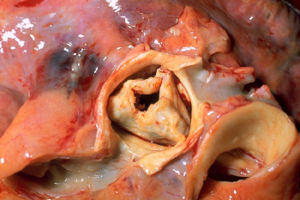
P.S. Why the above picture?

Friday, February 27, 2009

Wardround 27ii9


The two minute talks on Gram positive cocci and gram negative bacilli were well researched and presented.You should now have a structure to help choose an appropriate antibiotic regime. We will test this on the ward rounds over the coming weeks. Dr Jones has also asked for a brief on the use of Tigecycline and Daptomycin for next week

The paper for discussion next Tuesday is Unburdening the Difficult Clinical Encounter, Kurt Kroenke, Arch Intern Med 2009;169 333-334.

Friday will be you opportunity to shine while solving the Plague of Athens.

Interesting Topics:
Nutritional support in chronic liver disease
Aortic stenosis

MJM

Saturday, February 21, 2009

Wardround 20ii9


Good efforts in your talks about thrombolysis. I would like you to make the talks more specific and precise. Tell us the actual evidence, precise numbers and sources. Don't waste time with introductions or telling us stuff we all know already. Make the two minutes count. Let's have the re-hashed talks on thrombolysis on Tuesday.

The assignment for Friday is to produce a diagnosis of the illness in Athens described by Thucydides in 431 B.C. in The History of the Peloponnesian War . If you click on the link it will take you to a copy of the piece. The web page begins with chapter VI, but you can skip down to chapter VII (unless you would like to read about the war). If you cannot find the right section, press ctrl-F and type in plague.

You need to have an opinion on the diagnosis and be prepared to argue your corner. Make sure you revise the signs and symptoms of the disease you choose. Your two minute tutorials could be on some aspect of your chosen disease.

MJM

Sunday, February 08, 2009

Wardround 6ii9


The reading for discussion on Tuesday is Aunt Sophie’s Choice: the perils of paternalism. Schafer A.

The two minute talks this week were about abscesses. Good talks which I hope you found helpful. Remember the basics: consider the types of organisms that are possible, which will be altered by travel and immunocompetence. Always, ALWAYS, have your own plan in mind when seeking advice, then make sure you understand why any new plan differs from your own.

For nest week the two minute talks will be Neurology: recognising and understanding the following as causes of impaired walking:
Amyotrophic lateral sclerosis
Myelopathy (Dr Teo)
Peripheral neuropathy (Dr Jani)

Two minutes only. Be concise and precise. Quote your sources.

Interesting Topics

Benzodiazepine withdrawal exacerbated by quinolones (papers in patient's notes)

MJM

Sunday, February 01, 2009

Wardround 30i9


The reading for Tuesday will be "Human guinea pigs"--a history. M H Pappworth. BMJ 1990 December 22; 301(6766): 1456–1460. Read and think.

This week's talks were about clinical assessment of parietal lesions, cerebellar dysfunction and differentiating bulbar and pseudobulbar palsy.

To simplify things, I like to think of parietal dysfunction as Motor: Dysphasia (dominant) and Dyspraxia (non-dominant); Sensory: Inattention and astereognosis. (The inability to recognise a deficit is called anosagnosia). I had not come across cerebellar DASHING before, and being stuck in my ways I will be keeping to DANISH. Pseudo and true bulbar palsy have many subtle differences, I would concentrate on tongue wasting with fasciculation and absent gag in bulbar palsy and increased jaw jerk and choking episodes in pseudobulbar disease.

For Friday, the assignments as two minute talks are Abscesses: contributing factors, organism and treatment. Choose among yourselves which sites to talk about from:
Brain
Liver
Psoas
Empyema (not an abscess, I know)

Interesting topics

Dyspraxia

Arteria Lusoria, see here for diagrams of the anatomy, and NEJM Volume 346(21), 23 May 2002, p 1637 for a case report.

MJM

Sunday, January 11, 2009

Wardround 9i9

The reading for Tuesday is Immoral advances: Is science out of control? - science-in-society - 09 January 2009 - New Scientist. Read and think.

For Friday the two minute tutorials are about imported fevers. Two minutes please on your choice of these cases returning to the UK with a fever:

Fell in the water of Lake Malawai
Was bitten by a dog at Giza
Was bitten by a bug on the Amazon
Has a nosebleed having returned from Wagadugu
Fell in a well in Thailand

Post in the comments which you will be doing.

Interesting topics:

Very Basic Echocardiography
Diastolic failure


MJM

Tuesday, December 30, 2008

Last Post of 2008

It is time to start thinking again.

No wardround meeting on Friday but for Tuesday we can have a paper to discuss: Culture shock - patient as Icon, Icon as Patient. A Verghese. NEJM 2008: 359(26); 2748–2751. Elibrary

Read and think.

MJM

Sunday, December 21, 2008

Merry Christmas


The Christmas break in talks is upon us. Almost.

For Tuesday, come ready to tell us about a book or film (or other text) that has influenced you as a doctor.

Interesting Topics

Following on from our discusions about adverse drug reactions, you may want to have a look at Managing Drug-Drug Interaction Risks and Recognizing, Reporting, and Reducing Adverse Drug Reactions.

You are challenged to find at least one ADR from each of the groups A-F. Get to it.

MJM

Sunday, December 14, 2008

Wardound 12xii8

If you are not in DGRI you will see a screen shot above. I hope it will give a clue how to get the article for Tuesday's discussion. So yet again get it, read it and think about it. In a stew. Michael A Lacombe. American Journal of Medicine. 1991;91:276-278. from the E-library. There is an accompanying editorial if you are up to it.

The two minute talks will be about adverse drug reactions:
Epidemiology R
Mechanisms E
Management Dr Pope
Prevention G

There are a number of excellent resources available about this subject..see what you can find. Remember, time the talk for two minutes, quote your sources and make a handoiut which will be useful.

Interesting topics this week
Progressive supranuclear palsy
Refeeding syndrome

MJM

Wednesday, December 10, 2008

We don't need no stinkin' help findin' book learnin'


I ridicule your pathetic excuses for failing to get the "In a Stew" article. I got the pdf at the weekend and again tonight without problems. 

Get it....it's a challenge... and we can then discuss it.

MJM

Sunday, December 07, 2008

Wardround 5xii8


Sepsis bundle summary ↑ (you cannot see it at DGRI...images blocked)

The reading for Tuesday is In a stew. Michael A Lacombe. American Journal of Medicine. 1991;91:276-278. from the E-library. There is an accompanying editorial if you are up to it.

This week's talks were about antibiotics. This led to a discussion of the precipitants for MRSA such as antibiotic pressure and the ways we might try to limit this. Dr Jones outlined a method of deferring antibiotic use in non-urgent cases and stressed the need to identify specific about diagnoses. It should be clear to all that MJM and GAJ do not regard antibiotics as harmless, and MJM in particular decries the term "chest infection"....never use this in his hearing since it has the effect of decoupling frontal lobe function. Our hospital policy regarding IV antibiotics is a must read as is the antibiotic prescribing policy. Remember to look at the HPS site about C. difficile.

For next Friday the theme is decompensated liver disease:
Epidemiology G
Varices L
Ascites E
Encephalopathy R
Transplantation ?

Two minutes please. Be concise and precise. Quote your sources so others can read up more if inclined. Handouts can have more than bullet points again....but not mini-essays please. Think before you speak. Make the talk count. Don't tell us things we already know; there isn't time.

Interesting topics

Sepsis in Coeliac Disease (Dr Else's journal club talk about Gut 2008 Aug;57(8):1034-5).
Sepsis bundles

Remember we have some textbooks in the right hand Ward office

Sunday, November 30, 2008

Wardround 28xi8

This week's talks were about common tests such as cholesterol, creatinine and glucose. It is useful to revise things which we come to regard as so common that our knowledge of them sinks into our subconscious. Knowledge in the subconscious can become corrupted or merely fade away. As an SHO I was given some advice by a consultant Dr Avinash Mithal. He suggested that when reading a journal article, editorial or review paper I should first write down what I know about the subject. IHD is common...how common, exactly? In doing this I am surprised how quickly "things_I_know" have become "things_I_think_I_know_but_don't". Next time you read a paper, try Mithal's method.

For Friday the two minute talks are about Antibiotics. This is a free for all. Decide which talk you want to do and stake your claim by posting in the comments section. The choices are:

Who needs IV antibiotics?
What are the precipitants of C. difficile?
What are the precipitants of MRSA?
What is new in the antibiotic field?
What is antibiotic allergy, and what can be done about it?

Two minutes only. Be clear and concise. And here I am going to change the rules on the written handouts. You are allowed up to six bullet points only in text. Drawings or illustrations can be unlimited but must fit on one side of A4 and be large enough to be read without squinting or using a magnifying glass.

Our inability to read the paper on the last two Tuesdays I take as a message from the fates. Said paper will be cast to the furies. Though casting to the furries conjures more surreal images.

The reading for Tuesday will be Just how tainted has medicine become?  The Lancet 2002: 359 (9313), Page 1167, (6 April)

Interesting topics:


MJM


Monday, November 24, 2008

Wardround 21xi8

Since we could not discuss the reading for last week, klet's carry it over to Tuesday.

Friday's talks are on everyday tests. You have free rein to choose the most useful aspect of each for your talks. Make them interesting, concise and illuminating.

MJM

Monday, November 17, 2008

Wardround 14xi8

The reading k for next week will be Measuring quality of life. Is there such a thing as a life not worth living? Bobbie Farsides, Robert J Dunlop BMJ 2001;322:1481-1483

Two minute talks for Friday: SEPSIS
Recognition O
Circulation R
Antibiotics S
Epidemiology J

www.survivingsepsis.org is a good place to start your background reading.

MJM

Saturday, November 08, 2008

Wardround 7xi8

The reading for Tuesday is Comment: When not to write about autism, Ewen Calloway. New Scientist. Read it, think, and discuss.

The Two Minute talks for Friday will be about poisoning:
Paracetamol
Tricyclics
Carbon Monoxide
Ecstasy

Please plan your talk to last just two minutes. Be concise and precise, quote your sources and make a simple handout. A hundred words on the handout is too much. Don't waste time on the obvious. Let me help you out by saying I want facts specific to your topic. I will take it as read that Resuscitation/ABCDE etc are going to be done. The test you must pass is that those listening to the talk will be able to manage a case.

MJM