The reading for Tuesday 24th will be Assessing a learning disabled patient's capacity to manage his own care and make important decisions. Read the material and share your thoughts with the team.
Friday 2oth two minute talks are on the topic of cellulitis: epidemiology; diagnosis; treatment (uncomplicated case); complicated cellulitis; recurrent cellulitis. Keep it concise yet precise. Quote your sources.
Pre-warning for Friday 27th because it might take a little more work...
Thucydides described of the plague of Athens, in 431BC in The History of the Peloponnesian War. If you click on the link it will take you to a copy of the piece. The web page begins with chapter VI, but you can skip down to chapter VII (unless you would like to read about the war). If you cannot find the right section, press ctrl-F and type in plague. The challenge is to make a diagnosis. You will have two minutes to make your case for the diagnosis of your choice. We will then have a chat about how you would manage the situation.
MJM
Monday, August 16, 2010


Wednesday, August 11, 2010
Wardround 11viii10
The read and think for Tuesday is Communication discrepancies between Physicians and Hospitalized patients. DP Olsen, DM Windish. Arch Intern Med 2010: 170 (15); 1302-1307.
Two minute talks for Friday: Reducing adverse effects from:
NSAIDs
Glucocorticoids
Anticoagulants
Antibiotics
Statins
Pilot Audit for Monday:
DVT prophylaxis; standard=handbook.
Interesting Topics:
MJM
Wednesday, August 04, 2010
Welcome to ward 10
Welcome to your attachment on Ward 10
Farewell to the old guard and welcome to the new batch. Get ready to gorge yourself on fruit from the tree of knowledge.This blog will be a reminder of your training assignments each week. In addition to the departmental teaching sessions we have three ward based events:
1. Read & think :Each Tuesday there is a discussion of a subject or paper. I will usually set a paper but if you come across something which you believe we should read, I am happy to include it. Give yourself time to think.
2. Two Minute talks: each Friday you will give the team a talk on a subject you have researched that week. Again I will set the topics unless you come up with one yourselves. I am strict about the time and will not allow more than two minutes. Don't waste time telling us things that are obvious. Your talk can be illustrated with an A4 size handout which should be info-graphic rather than prose.
3. Morbidity and mortality meeting: monthly, I will give more info nearer the meeting.
Do read regularly and check your management against protocols and guidelines.
The paper to read for next Tuesday is Clinical craft: a lesson from Liverpool. DM Gore. Med. Humanit. 2001;27;74-75
The two minute talks this Friday will be medical emergencies: choose between yourselves from the following topics...
Anaphylaxis
Hyperkalaemia
Sudden loss of consciousness
If any other doctors are taking part they can choose from...
Sudden hypotension
Sudden hypoxia
Practice your talk, get the timing right, make it illuminating and tell us your sources. Have a look at this example handout... Anaphylaxis by Dr Hannah Gunn, or this slightly busier one on aspiration pneumonia by YT. The talk is more important than the handout so use your time appropriately. The trust blocks access to images but if you have internet access elsewhere you should be able to see them.
Next week we will start an audit of ..... HIV testing. Have a look at BHIVA guidelines for HIV testing 2008.
MJM
Tuesday, February 09, 2010
What's the diagnosis?
The reading for Friday is a description of the plague of Athens, written in 431BC by Thucydides in The History of the Peloponnesian War. If you click on the link it will take you to a copy of the piece. The web page begins with chapter VI, but you can skip down to chapter VII (unless you would like to read about the war). If you cannot find the right section, press ctrl-F and type in plague. The challenge is to make a diagnosis. You will have two minutes to make your case for the diagnosis of your choice. We will then have a chat about how to manage the situation.
MJM
MJM
Tuesday, January 05, 2010
Something to read 5i10
Medical Care for the Final Years of Life: "When You're 83, It's Not Going to Be 20 Years"
JAMA. 2009;302(24):2686-2694 (doi:10.1001/jama.2009.1871)
David B. Reuben
This is the first in a series....
JAMA. 2009;302(24):2686-2694 (doi:10.1001/jama.2009.1871)
David B. Reuben
This is the first in a series....
Sunday, November 29, 2009
Wednesday, November 25, 2009
Something to read
The Personal Equation in Medicine. JAMA. 2009;302(20):2265 reprinted from JAMA. 1909;53(22):1825-1826
Thursday, October 29, 2009
Couldn't find it? !!!
If you would like to read more, there is a good discussion of the approach to diagnosis in The cause of the plague of Athens: plague, typhoid, typhus, smallpox, or measles? Burke A. Cunha, Infect Dis Clin N Am 18 (2004) 29–43.
MJM
Tuesday, October 13, 2009
Making a diagnosis
The reading for Friday 18th is a description of the plague of Athens, written in 431BC by Thucydides in The History of the Peloponnesian War. If you click on the link it will take you to a copy of the piece. The web page begins with chapter VI, but you can skip down to chapter VII (unless you would like to read about the war). If you cannot find the right section, press ctrl-F and type in plague. The challenge is to make a diagnosis. You will have two minutes to make your case for the diagnosis of your choice. We will then have a chat about how to manage the situation.
MJM
MJM
Tuesday, September 01, 2009
Pharmaceutical Sponsorship
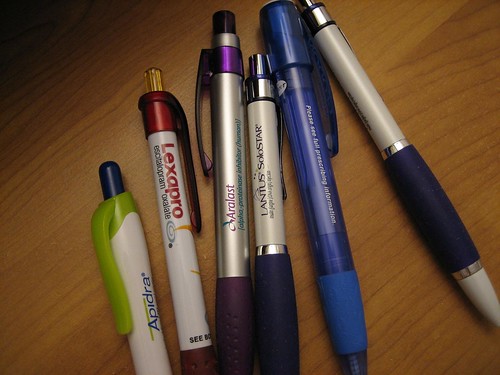
There is a suggestion that pharmaceutical companies sponsoring meetings should only be able to talk about drugs on the area formulary. What do you think about this? Do you think we should have sponsorship at all?
Have a read of The road to recovery. Is it time to bid farewell to the drug reps? by David Psetsky. It is on Medscape, but registration is both easy and free.
For the Friday meeting, those not presenting the case (and only one is doing that) are asked to give brief presentations on:
Benign Intracranial Hypertension
Aseptic meningitis related to drugs
Tuberculous meningitis
Herpes simplex encephalitis
Share them out between yourselves. I am looking for two minutes on the subject. Keep it concise and precise. No waffling. No powerpoint!
MJM
Friday, July 31, 2009

Thursday, July 30, 2009
Welcome to Ward 10

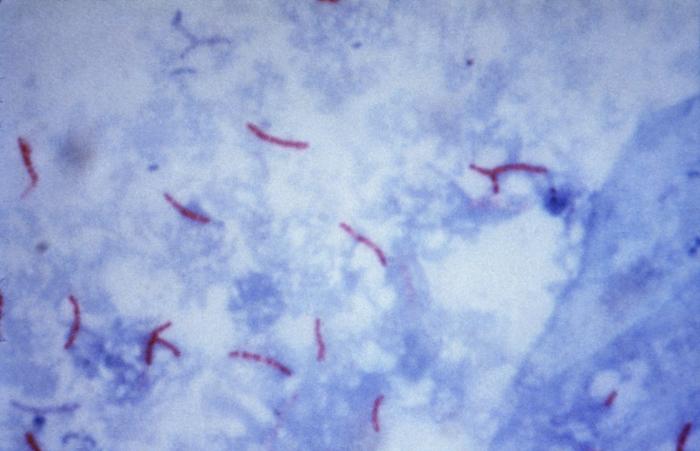
Welcome to Dumfries and Galloway. I will consider giving a prize to anyone who can identify where this picture is.
And welcome to the ward. You will find more information about your time on ward 10 by clicking here.
If you are reading this page in the hospital you will not be able to see the image above.
MJM
Thursday, July 02, 2009
Sunday, June 07, 2009
Wardround 5vi9

The talks for Friday will be The use of serology in the diagnosis of:
Hepatitis B (ZB)
Hepatitis C (CM)
HIV (FY1)
Keep to the two minutes, drop the snippets of information that we already know and aim to leave your audience able to use serology appropriately in these situations. Remember to quote your sources. I am away on Friday, but will be testing the effects of the talks by asking some questions on the following Tuesday.
The paper to read for Tuesday will be Spellbinding and spellbreaking in convalescence<. George Day. Lancet 1961; 279 (7222):211-213. Log on to the NHS Scotland elibrary with your Athens password and choose the Lancet. You will be offered several sources, choose the Sciencedirect Lancet site.
Sunday, May 17, 2009
For 19v9
The reading for Tuesday will be Ethical Debate: serious drug overdoses, B Dahal, BMJ 1995;311:115-116
You already have your talks for Friday, about diagnosis of various rheumatological conditions. remember classification criteria are not diagnostic criteria....or are they?
MJM
Friday, April 24, 2009
Wardround 24iv9
The reading for Tuesday will be "Stepford doctors": an allegory. GM Sayers. Medical Humanities 2006;32:57-58. Read and think.
This week’s two minute talks were about drugs with significant potential for adverse effects: warfarin, rifampicin, aminoglycosides and penicillin (with reported allergy). Take a minute or two and ask yourself what you now know about the the use of these drugs that you didn’t know before.
For next Friday the task is a two minute tutorial on the interpretation of results from:
Urinalysis
Arterial blood gases
Pulmonary Function tests
(and an extra in case we have an extra person…oxygen saturations)
MJM
Monday, April 06, 2009
wardround 3iv9
This week's talks were a challenge of summarising what needs to be done about a coincidental chronic illnes in a surgical patient. Both of you recognised the need to address issues directly related to the surgical aspects (risk of hypoadrenalism and thrombosis in lupus and blood sugar/ketones in diabetes) as well as a plan for checking that their longer term management was on track. That's your first two minutes out of the way. Now for next week, the two minute talks onFriday will be recognising the effects of:
Heroin (AB)
Cannabis (free)
Cocaine (CM)
Amphetamine (BS)
Be concise yet precise, and remain anchored in the real world... and just two minutes please.
For discussion on Tuesday I would like you to read Why are medical journals so dull by Richard Asher. Originally published in the BMJ in 23 August 1958. Tempted as I am to leave you to get hold of the paper using your own initiative there is a link here if you do not feel like taking up the challenge. The link works for me but if you are unsuccessful I can give you a paper copy (folded in the shape of a dunce's hat!)
MJM
Friday, March 27, 2009
Wardround 27iii9
We did not get to discuss our paper on Tuesday so let's give it ago this coming week. Read and think, then discuss intelligently It's the evidence stupid, F Godlee, BMJ 2008;337:a2119
The talks today were the management, in two minutes of particular scenarios. The mild biochemical hypothyroidism (FI) was well researched and summarised, since it is in fact quite a complex topic. It is important to consider the usefulness of recommended tests both from a resources standpoint but also as a discipline for yourself. When would you order thyroid autoantibodies?
The abnormal LFT scenario talk (BS) had less meat to it, but thereis always next week eh? Think carefully about timing of tests and use investigations as part of an overall plan.
For next Friday the scenario is a patient under orthopaedic care with a wrist fracture. The surgeons have asked for the patient's medical condition and treatment to be reviewed and optimised. The osteoporosis team are already on the case. So what will you be checking for this patient with:
SLE (FY1)
Chronic liver disease (BS)
Type 2 Diabetes mellitus (CM)
MJM
Monday, March 23, 2009
Wardround 20iii9
The two minute tutorials for Friday are "What to do about..."
A 45 year old woman with aches and positive ANA (CM)
A 60 year old woman with abnormal LFTS ALP167 AST 60 ALT 90 (BS)
A 40 year old with TSH 7 T4 12 (FI)
Two minutes only, be practical rather than theoretical.
The tuesday reading is It's the evidence stupid, F Godlee, BMJ 2008;337:a2119
MJM
A 45 year old woman with aches and positive ANA (CM)
A 60 year old woman with abnormal LFTS ALP167 AST 60 ALT 90 (BS)
A 40 year old with TSH 7 T4 12 (FI)
Two minutes only, be practical rather than theoretical.
The tuesday reading is It's the evidence stupid, F Godlee, BMJ 2008;337:a2119
MJM
Friday, March 13, 2009
Wardround 13iii9

The choices for important figures in infection were Fleming (FI), Koch (ST), Pasteur (BJ). Anybody turning in their grave about being overlooked?
For those who would like to read more about the plague of Athens could pass a little time reading The cause of the plague of Athens: plague, typhoid, typhus, smallpox, or measles? Burke A. Cunha, Infect Dis Clin N Am 18 (2004) 29–43.
The paper to read and discuss for next Tuesday is On the antiseptic principle in the Practice of surgery. Joseph Lister. Lancet 1867, Sept 21, 90 (2299) 353-356. You should be able to get the PDF using your Athens password. doi:10.1016/S0140-6736(02)51827-4 (don’t know what a DOI is?....better find out, you will come across them again).
The two minute tutorials for Friday are based on occupational lung disease:
Lung (FI)
Skin (ST)
Other important Occupational diseases (CM) - or choose from neurological, GI/GU, musculoskeletal, infectious.
Remember two minutes only; be concise yet precise, make it worthwhile to listen and quote your sources.
Interesting Topics:
Eplerenone
GI bleeding on low dose aspirin
Paronychia
MJM
P.S. Why the above picture?
Subscribe to:
Posts (Atom)