An interesting set of talks about nosocomial illness. I liked the Falls in Hospital handout: Simple, clear, no waffle. We have agreed that "have you had any falls" should be a routine question. I tend to put it in the neurology section of systems review.
It was good to see our local data for C. difficile. Always good to include local information in a talk. SS will read one of the C. Difficile ICP sheets.
Next Friday's topic is Electrolyte disturbance. Research, cogitate and give the group two minutes on one of the topics below. Clarity, practicality and memorability (for the right reasons) will be assessed.
Sodium
Potassium
Calcium
Magnesium
The reading for Tuesday is Mistakes. R Lesnewski. JAMA 2006: 296 (11); 1327-8
Monday's Audit: Have you fallen?
Interesting topics
Ecthyma Gangenosum
Staphylococcal infection
Amiodarone Lung
Campylobacter
MJM
Friday, August 19, 2011


Friday, August 12, 2011
Glucocorticoid adverse effects
Our topic today was adverse effects of glucocorticoids. These are commonly used drugs with significant adverse effects. If we wish to limit unwanted effects we need to know how common they are, harness patient's concerns to help us and have a plan for when we use steroids.
Your talks showed that you had put effort into researching the topic, but there needs to be a little more planning on the presentation side. The time allowed means that you have to be concise, and to make it sharp you must always be precise. Numbers (10%) not descriptors (quite common). List your sources on the handout so the audience can follow up if they want to.
Here are some useful papers. The links are to abstracts but the full versions are only a password away via ATHENS.
Monitoring adverse effects of low dose glucocorticoid therapy: EULAR recommendations for clinicalk trials and daily practice. MC van der Goes et al Ann Rheum Dis 2010;69:1913-1919
Epidemiology of glucocorticoid-assoiated adverse events. AK McDonough et al. Curr Opin Rheumatol 2008 Mar;20(2):131-7.
Patients’ and rheumatologists’ perspectives on glucocorticoids. MC van der Goes et al. Ann Rheum Dis 2010;69:1015-1021.
The acronym below which is an aide-memoire for reducing adverse drug effects in general. Apologies to its author, who I can't remember, but I first heard it at a meeting about 5 years ago.
S...Stratify: is the patient at higher risk of an ADR: comorbidities, drugs, age.
A...Assess: Hepatitis status, TB risk, vaccinations up to date?
F...Fend-off: vaccinate, optimise health (stop smoking etc).
E...Evaluate: check what ADRs might be expected, look for them.
T...Treat: nip it in the bud (UTI is easier to treat than septic multi-organ failure).
Y...Yearly: re-evaluate all of the above regularly. The frequency depends on the drug.
The topic for next Friday is Nosocomial illness:
Falls
C. Difficile
MRSA
Line infections
Two minutes please. Be concise yet precise. Tell us your sources. you are allowed an A4 (single side) handout.
Audit standard for next week. All casenote sheets have the patient's name and CHI.
MJM
Your talks showed that you had put effort into researching the topic, but there needs to be a little more planning on the presentation side. The time allowed means that you have to be concise, and to make it sharp you must always be precise. Numbers (10%) not descriptors (quite common). List your sources on the handout so the audience can follow up if they want to.
Here are some useful papers. The links are to abstracts but the full versions are only a password away via ATHENS.
Monitoring adverse effects of low dose glucocorticoid therapy: EULAR recommendations for clinicalk trials and daily practice. MC van der Goes et al Ann Rheum Dis 2010;69:1913-1919
Epidemiology of glucocorticoid-assoiated adverse events. AK McDonough et al. Curr Opin Rheumatol 2008 Mar;20(2):131-7.
Patients’ and rheumatologists’ perspectives on glucocorticoids. MC van der Goes et al. Ann Rheum Dis 2010;69:1015-1021.
The acronym below which is an aide-memoire for reducing adverse drug effects in general. Apologies to its author, who I can't remember, but I first heard it at a meeting about 5 years ago.
S...Stratify: is the patient at higher risk of an ADR: comorbidities, drugs, age.
A...Assess: Hepatitis status, TB risk, vaccinations up to date?
F...Fend-off: vaccinate, optimise health (stop smoking etc).
E...Evaluate: check what ADRs might be expected, look for them.
T...Treat: nip it in the bud (UTI is easier to treat than septic multi-organ failure).
Y...Yearly: re-evaluate all of the above regularly. The frequency depends on the drug.
The topic for next Friday is Nosocomial illness:
Falls
C. Difficile
MRSA
Line infections
Two minutes please. Be concise yet precise. Tell us your sources. you are allowed an A4 (single side) handout.
Audit standard for next week. All casenote sheets have the patient's name and CHI.
MJM
Thursday, August 11, 2011
11viii11

The two minute tutorials for Friday are focused on the adverse effects of corticosteroid therapy:
General overview
How to work up a patient prior to treatment
How to assess a patient on treatment
What are patient's views on steoid side effects
Tuesday's read and think will be A 76-Year-Old Man With Multiple Medical Problems and Limited Health Literacy. Amy Ship. JAMA August 10 2011.
Interesting topics
Illiteracy in rheumatoid arthritis patients as determined by the Rapid Estimate of Adult Literacy in Medicine (REALM) score. Gordon et al. Rheumatology (2002) 41 (7): 750-754
It's Good to Feel Better But It's Better To Feel Good and Even Better to Feel Good as Soon as Possible for as Long as Possible. Response Criteria and the Importance of Change at OMERACT 10. V Strand et al. J Rheumatol August 2011 38(8):1720-1727
MJM
Wednesday, August 03, 2011
It starts again: August 2011
Welcome to Ward 10. I hope you will both enjoy your stay with us and make the most of it. Learning does require a little effort but hopefully we can help each other by sharing the task.
The two minute tutorial topic for Friday is The Normal ECG. I would like you to choose amongst yourselves from: P wave, QRS complex, T wave, PR interval, Axis. The goal is for us to be able to recognise a normal ECG. You are limited to two minutes. Be precise yet concise and tell us your sources.
The paper to read, digest (intellectually) and then discuss on Tuesday is The Road to Recovery, by David Psetsky.
We usually have a weekly topic for audit, but we can choose our first topic on Friday.
There are at least two on-going audits of which you should be aware:
Antibiotic use is checked against local guidance (available on the intranet and due to be updated any day). It is important that the correct empirical antibiotic is chosen or the reason for chosing an alternative is clearly stated in the case notes or prescription kardex. The indication and expected duration of treatment or review date should be recorded.
We audit the recording of DNA-CPR and ceiling of care weekly (well you do).
Interesting papers:
Paracetamol, ibuprofen, or a combination of both drugs against knee pain: an excellent new randomised clinical trial answers old questions and suggests new therapeutic recommendations.
PS the links in the frame on the left are mostly inactive at present, awaiting my guiding hand.
MJM
The two minute tutorial topic for Friday is The Normal ECG. I would like you to choose amongst yourselves from: P wave, QRS complex, T wave, PR interval, Axis. The goal is for us to be able to recognise a normal ECG. You are limited to two minutes. Be precise yet concise and tell us your sources.
The paper to read, digest (intellectually) and then discuss on Tuesday is The Road to Recovery, by David Psetsky.
We usually have a weekly topic for audit, but we can choose our first topic on Friday.
There are at least two on-going audits of which you should be aware:
Antibiotic use is checked against local guidance (available on the intranet and due to be updated any day). It is important that the correct empirical antibiotic is chosen or the reason for chosing an alternative is clearly stated in the case notes or prescription kardex. The indication and expected duration of treatment or review date should be recorded.
We audit the recording of DNA-CPR and ceiling of care weekly (well you do).
Interesting papers:
Paracetamol, ibuprofen, or a combination of both drugs against knee pain: an excellent new randomised clinical trial answers old questions and suggests new therapeutic recommendations.
PS the links in the frame on the left are mostly inactive at present, awaiting my guiding hand.
MJM
Wednesday, January 12, 2011
Interesting Publication
EXPERT CONSENSUS DOCUMENT
ACCF/ACG/AHA 2010 Expert Consensus Document on the Concomitant Use of Proton Pump Inhibitors and Thienopyridines: A Focused Update of the ACCF/ACG/AHA 2008 Expert Consensus Document on Reducing the Gastrointestinal Risks of Antiplatelet Therapy and NSAID Use
There is a brief comment in JAMA 2011;305(2):135-136.
ACCF/ACG/AHA 2010 Expert Consensus Document on the Concomitant Use of Proton Pump Inhibitors and Thienopyridines: A Focused Update of the ACCF/ACG/AHA 2008 Expert Consensus Document on Reducing the Gastrointestinal Risks of Antiplatelet Therapy and NSAID Use
There is a brief comment in JAMA 2011;305(2):135-136.
Wednesday, August 25, 2010
Reading for Tuesday 31viii10
RANDOMISED TRIAL OF INTRAVENOUS STREPTOKINASE, ORAL ASPIRIN, BOTH, OR NEITHER AMONG 17 187 CASES OF SUSPECTED ACUTE MYOCARDIAL INFARCTION: ISIS-2.
The Lancet, Volume 332, Issue 8607, Pages 349 - 360, 13 August 1988
Why have I chosen this paper.
MJM
The Lancet, Volume 332, Issue 8607, Pages 349 - 360, 13 August 1988
Why have I chosen this paper.
MJM
Monday, August 16, 2010
16viii10
The reading for Tuesday 24th will be Assessing a learning disabled patient's capacity to manage his own care and make important decisions. Read the material and share your thoughts with the team.
Friday 2oth two minute talks are on the topic of cellulitis: epidemiology; diagnosis; treatment (uncomplicated case); complicated cellulitis; recurrent cellulitis. Keep it concise yet precise. Quote your sources.
Pre-warning for Friday 27th because it might take a little more work...
Thucydides described of the plague of Athens, in 431BC in The History of the Peloponnesian War. If you click on the link it will take you to a copy of the piece. The web page begins with chapter VI, but you can skip down to chapter VII (unless you would like to read about the war). If you cannot find the right section, press ctrl-F and type in plague. The challenge is to make a diagnosis. You will have two minutes to make your case for the diagnosis of your choice. We will then have a chat about how you would manage the situation.
MJM
Friday 2oth two minute talks are on the topic of cellulitis: epidemiology; diagnosis; treatment (uncomplicated case); complicated cellulitis; recurrent cellulitis. Keep it concise yet precise. Quote your sources.
Pre-warning for Friday 27th because it might take a little more work...
Thucydides described of the plague of Athens, in 431BC in The History of the Peloponnesian War. If you click on the link it will take you to a copy of the piece. The web page begins with chapter VI, but you can skip down to chapter VII (unless you would like to read about the war). If you cannot find the right section, press ctrl-F and type in plague. The challenge is to make a diagnosis. You will have two minutes to make your case for the diagnosis of your choice. We will then have a chat about how you would manage the situation.
MJM
Wednesday, August 11, 2010
Wardround 11viii10
The read and think for Tuesday is Communication discrepancies between Physicians and Hospitalized patients. DP Olsen, DM Windish. Arch Intern Med 2010: 170 (15); 1302-1307.
Two minute talks for Friday: Reducing adverse effects from:
NSAIDs
Glucocorticoids
Anticoagulants
Antibiotics
Statins
Pilot Audit for Monday:
DVT prophylaxis; standard=handbook.
Interesting Topics:
MJM
Wednesday, August 04, 2010
Welcome to ward 10
Welcome to your attachment on Ward 10
Farewell to the old guard and welcome to the new batch. Get ready to gorge yourself on fruit from the tree of knowledge.This blog will be a reminder of your training assignments each week. In addition to the departmental teaching sessions we have three ward based events:
1. Read & think :Each Tuesday there is a discussion of a subject or paper. I will usually set a paper but if you come across something which you believe we should read, I am happy to include it. Give yourself time to think.
2. Two Minute talks: each Friday you will give the team a talk on a subject you have researched that week. Again I will set the topics unless you come up with one yourselves. I am strict about the time and will not allow more than two minutes. Don't waste time telling us things that are obvious. Your talk can be illustrated with an A4 size handout which should be info-graphic rather than prose.
3. Morbidity and mortality meeting: monthly, I will give more info nearer the meeting.
Do read regularly and check your management against protocols and guidelines.
The paper to read for next Tuesday is Clinical craft: a lesson from Liverpool. DM Gore. Med. Humanit. 2001;27;74-75
The two minute talks this Friday will be medical emergencies: choose between yourselves from the following topics...
Anaphylaxis
Hyperkalaemia
Sudden loss of consciousness
If any other doctors are taking part they can choose from...
Sudden hypotension
Sudden hypoxia
Practice your talk, get the timing right, make it illuminating and tell us your sources. Have a look at this example handout... Anaphylaxis by Dr Hannah Gunn, or this slightly busier one on aspiration pneumonia by YT. The talk is more important than the handout so use your time appropriately. The trust blocks access to images but if you have internet access elsewhere you should be able to see them.
Next week we will start an audit of ..... HIV testing. Have a look at BHIVA guidelines for HIV testing 2008.
MJM
Farewell to the old guard and welcome to the new batch. Get ready to gorge yourself on fruit from the tree of knowledge.This blog will be a reminder of your training assignments each week. In addition to the departmental teaching sessions we have three ward based events:
1. Read & think :Each Tuesday there is a discussion of a subject or paper. I will usually set a paper but if you come across something which you believe we should read, I am happy to include it. Give yourself time to think.
2. Two Minute talks: each Friday you will give the team a talk on a subject you have researched that week. Again I will set the topics unless you come up with one yourselves. I am strict about the time and will not allow more than two minutes. Don't waste time telling us things that are obvious. Your talk can be illustrated with an A4 size handout which should be info-graphic rather than prose.
3. Morbidity and mortality meeting: monthly, I will give more info nearer the meeting.
Do read regularly and check your management against protocols and guidelines.
The paper to read for next Tuesday is Clinical craft: a lesson from Liverpool. DM Gore. Med. Humanit. 2001;27;74-75
The two minute talks this Friday will be medical emergencies: choose between yourselves from the following topics...
Anaphylaxis
Hyperkalaemia
Sudden loss of consciousness
If any other doctors are taking part they can choose from...
Sudden hypotension
Sudden hypoxia
Practice your talk, get the timing right, make it illuminating and tell us your sources. Have a look at this example handout... Anaphylaxis by Dr Hannah Gunn, or this slightly busier one on aspiration pneumonia by YT. The talk is more important than the handout so use your time appropriately. The trust blocks access to images but if you have internet access elsewhere you should be able to see them.
Next week we will start an audit of ..... HIV testing. Have a look at BHIVA guidelines for HIV testing 2008.
MJM
Tuesday, February 09, 2010
What's the diagnosis?
The reading for Friday is a description of the plague of Athens, written in 431BC by Thucydides in The History of the Peloponnesian War. If you click on the link it will take you to a copy of the piece. The web page begins with chapter VI, but you can skip down to chapter VII (unless you would like to read about the war). If you cannot find the right section, press ctrl-F and type in plague. The challenge is to make a diagnosis. You will have two minutes to make your case for the diagnosis of your choice. We will then have a chat about how to manage the situation.
MJM
MJM
Tuesday, January 05, 2010
Something to read 5i10
Medical Care for the Final Years of Life: "When You're 83, It's Not Going to Be 20 Years"
JAMA. 2009;302(24):2686-2694 (doi:10.1001/jama.2009.1871)
David B. Reuben
This is the first in a series....
JAMA. 2009;302(24):2686-2694 (doi:10.1001/jama.2009.1871)
David B. Reuben
This is the first in a series....
Sunday, November 29, 2009
Wednesday, November 25, 2009
Something to read
The Personal Equation in Medicine. JAMA. 2009;302(20):2265 reprinted from JAMA. 1909;53(22):1825-1826
Thursday, October 29, 2009
Couldn't find it? !!!
If you would like to read more, there is a good discussion of the approach to diagnosis in The cause of the plague of Athens: plague, typhoid, typhus, smallpox, or measles? Burke A. Cunha, Infect Dis Clin N Am 18 (2004) 29–43.
MJM
Tuesday, October 13, 2009
Making a diagnosis
The reading for Friday 18th is a description of the plague of Athens, written in 431BC by Thucydides in The History of the Peloponnesian War. If you click on the link it will take you to a copy of the piece. The web page begins with chapter VI, but you can skip down to chapter VII (unless you would like to read about the war). If you cannot find the right section, press ctrl-F and type in plague. The challenge is to make a diagnosis. You will have two minutes to make your case for the diagnosis of your choice. We will then have a chat about how to manage the situation.
MJM
MJM
Tuesday, September 01, 2009
Pharmaceutical Sponsorship
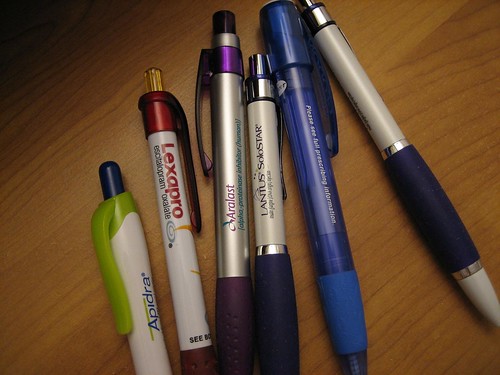
There is a suggestion that pharmaceutical companies sponsoring meetings should only be able to talk about drugs on the area formulary. What do you think about this? Do you think we should have sponsorship at all?
Have a read of The road to recovery. Is it time to bid farewell to the drug reps? by David Psetsky. It is on Medscape, but registration is both easy and free.
For the Friday meeting, those not presenting the case (and only one is doing that) are asked to give brief presentations on:
Benign Intracranial Hypertension
Aseptic meningitis related to drugs
Tuberculous meningitis
Herpes simplex encephalitis
Share them out between yourselves. I am looking for two minutes on the subject. Keep it concise and precise. No waffling. No powerpoint!
MJM
Friday, July 31, 2009

Thursday, July 30, 2009
Welcome to Ward 10

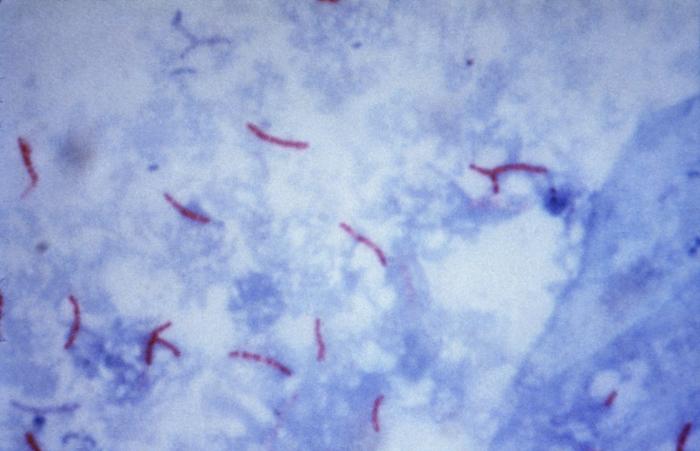
Welcome to Dumfries and Galloway. I will consider giving a prize to anyone who can identify where this picture is.
And welcome to the ward. You will find more information about your time on ward 10 by clicking here.
If you are reading this page in the hospital you will not be able to see the image above.
MJM
Thursday, July 02, 2009
Subscribe to:
Posts (Atom)