The discussion this Tuesday began with the paper The strange malady of Alessandro’s uncle, Neil A (Tony) Holtzman. I was prompted to choose the paper following the journal club discussion last week about the genetic markers for responses to warfarin. The paper describes the development of a new (genetic) investigation and treatment and its impact on the aforementioned uncle. Many interventions will appear better than they prove to be when evidence is limited.and the passage of time gives more accurate assessments.
The paper for discussion next week will be Screening for MRSA, M Wilcox, BMJ 2008;336:899-900
The two minute tutorials on diagnoses were well done but I would recommend adding an additional aliquot of thought to the planning stage. Ask yourself, “what do I want the listener to be able to do or know after this two minutes?” Detailed discussion of diagnostic criteria may contain all the necessary information but that alone does not complete the task. Keep the handout to one side of A4 and make it memorable. Ask yourself the questions MJM or GAJ might ask. Be honest with yourself about the handout. Would you read or keep somethiong that can be printed from a website in 10 seconds? What would be more useful?
Next week’s talks are about Colitits: epidemiology, investigation, treatment.
MJM
Monday, April 28, 2008


Sunday, April 20, 2008
Wardround 18iv8
 Back on-line.
The reading for Tuesday will be The strange malady of Alessandro’s uncle, Neil A (Tony) Holtzman. BMJ 2007;335:1306-1307, (doi:10.1136/bmj.39407.647014.80). Read it and think, then share your views.
The two minute talks for Friday will be Making a diagnosis: you can decide among yourselves who will make each presentation.
What constitutes Diabetes mellitus?
What constitutes COPD?
What constitutes Coronary artery disease?
What constitutes Delirium?
Two minutes please. practice it and make sure your timing is accurate. be concise and precise, quote your sources.
Interesting topics
Hypereosinophilic syndrome or look in uptodate which has an excellent article on the subject.
And here is an article worth a read, Blood Eosinophilia: A New Paradigm in Disease Classification, Diagnosis, and Treatment, A Tefferi, Mayo Clin Proc. 2005;80:75-83
MJM
Thursday, April 03, 2008

Saturday, March 08, 2008
Wardround 7iii8

Last week's talks were about substance abuse: acute management and harm reduction. Good talks, full of useful information but the handouts were a little to bulky for my liking...try something that can be taken in with one or two glances rather than a page that requires reading. Have a look at this as an example. This would probably be the equivalent of all the talks at a Friday meeting.
What pearls have I taken away from these talks? (if I've missed a good one just add it to the comments section)
Myocardial sensitisation to catecholamines with solvent inhalation: aim for calm and quiet surroundings, monitor cardiac rhythm and use sedation if necessary. The acute effects should have worn off by 6 hours , and if not consider a complication such as myocarditis.
In acute alcohol withdrawal there is no one-size-fits-all regime. The benzodiazepine dosing must be titrated to control withdrawal but avoid over sedation. SIPS scoring is a good way to do this but if not in use you will have to use some common sense. (It's certainly better than using none.)
Identifying alcohol misuse in patients presenting with other conditions is important. A reported alcohol intake less than the recommended level does not exclude abuse. Be aware, ask more detailed questions (eg CAGE) if you are suspicious.
Further reading
Alcohol - problem drinking
Opiod dependence
Next week's two minute talks will be about Parkinson's disease:
Diagnosis
Management
Problems with treatment
This time try to have visual rather than written handouts. If you want to give out lists, just tell us where to find them e.g. more information at www.listsofcauses.com.
The discussion for Tuesday will be "Should doctor's who see prisoners insist hand-cuffs are removed?" You may want to read Restraint of detainees in NHS facilities.
MJM
Sunday, March 02, 2008
Wardround 29ii8
 The talks this week were about interstitial lung diseases. You are getting the hang of it now; Information targeted at clinical practice and delivered so as to be memorable. The best talk/handout this week was Extrinsic allergic alveolitis (Dr NNT). Remember to ask about activities up to 6 hours before the onset of acute dyspnoea. Always consider infective causes. (I have a feeling that I need to take care not to evolve into an Infectious Diseases evangelist.)
For next week the assignments are based on substance misuse:
Glue (MR)
Alcohol (NNT)
Cocaine (KL)
Crystal Meth (R)
Two minutes please on the management of acute toxicity and harm reduction.
The reading last week was Doctors’ education: the invisible influence of drug company sponsorship. Ray Moynihan. BMJ 2008;336:416-417. You may want to have a look at Who pays for the pizza? by the same author.
For next Tuesday I would like you to read and think about Junior doctors' shifts and sleep deprivation. Carol Black et al, BMJ 2005;330:1404.
You may want to test your own level of tiredness with this online psychometric test
Interesting topics
Alternative causes for elevated cardiac troponin levels.
Ann Intern Med 2005;142:786-791
Clozapine myocarditis
Marfan's Syndrome
MJM
Monday, February 25, 2008
Wardround 22ii8
The reading for Tuesday will be, Doctors’ education: the invisible influence of drug company sponsorship. Ray Moynihan. BMJ 2008;336:416-417 (23 February).
There is an extended podcast on rheumatoid arthritis, with slides available (60 minutes duration) at the training site.
MJM
There is an extended podcast on rheumatoid arthritis, with slides available (60 minutes duration) at the training site.
MJM
Sunday, February 17, 2008
Wardround 15ii8
A good attempt (first/second stabs) at the two minute talks on Friday. Much effort for so little gain. But this is the point of training...getting better. Next week we have Neuropathy as our topics, split into acute, subacute and chronic. Ask yourself "what do I want to learn?" "what do I want my colleagues to remember?" " how can I get he message accross so they remember?"
Then prune it to two minutes, keep it concise and yet precise and quote your sources. make a handout to get the message accross. And be realistic; no one will read a 400 word A4 handout but they will glance at pictures. And another piece of advice. Have the handouts ready before the wardround starts.
Here is my old podcast on Neuropathy
It won't be visible inside DGRI but it is also available here.
The reading for Tuesday is The Interpreter of Facts, HW Horowitz. JAMA 2008; 299: 497-498.
Get it from the elibrary, or be old-fashioned and caress the journal in your own hands. Read and think.
Interesting Topics
Status Epilepticus
MJM
Then prune it to two minutes, keep it concise and yet precise and quote your sources. make a handout to get the message accross. And be realistic; no one will read a 400 word A4 handout but they will glance at pictures. And another piece of advice. Have the handouts ready before the wardround starts.
Here is my old podcast on Neuropathy
It won't be visible inside DGRI but it is also available here.
The reading for Tuesday is The Interpreter of Facts, HW Horowitz. JAMA 2008; 299: 497-498.
Get it from the elibrary, or be old-fashioned and caress the journal in your own hands. Read and think.
Interesting Topics
Status Epilepticus
MJM
Sunday, February 10, 2008
Wardround 8ii8

The reading for Tuesday is Clinical craft: a lesson from Liverpool. D M Gore. Journal of Medical Ethics 27:74-75 (2001). Read and think.
The talks this week were about rheumatological presentations to admissions units. Well done to Dr Lewin for a well presented (and acutely timed) talk on the red eye, diarrhoea, sore joints syndrome, and with little warning. It is worth having a looke at the recently produced guidelines for the hot swollen joint. By the way (SZ) it wasn't that difficult to find, being the second hit when I googled it. You might want to see my summary sheet. In dealing with the various scenarios, I would recommend differentiating joint/muscle symptoms with or without objective signs and with or without involvement of other organ systems. SIRS is sepsis until you know otherwise.
The talks for next week are about stroke. Thrombolysis (NN), anti-platelet treatment (MR) and surgical treatments (KL). Two minutes please, keep it precise and concise, quote your sources and give a handout you would be proud to be shown in twenty years....yes I am that cruel.
Interesting topic
Pulmonary Embolism
Hereditary Thrombophilia
MJM
Sunday, February 03, 2008
Wardround 1ii8

The Reading for next Tuesday is Waste in the NHS, Andrew Moore, Bandolier Extra, February 2002. Give yourself time to read it, then let's hear what you think.
The two minute talks this week were about Gram stained rods and cocci. You should now be able to target appropriate antibiotics a little better. Don't ever think "I'll use a broad spectrum antibiotic".....plan the spectrum to cover the clinical situation.
The talks for next week will be about rheumatological emergencies.
The single hot joint SZ
Generalised myalgia/arthralgia CG
Red eye, diarrhoea, and sore joints PM
A two minute talk please, keep it concise and precise, quote your sources and provide a one sheet handout.
Interesting topics
Helicobacter
MJM
Friday, January 25, 2008
Wardround 25i8

Our discussion this week was about ethics. The use of jokes which might offend, open-ness with patients, harrassment, ethics committees, politics and medicine all had their moment. It can be helpful to think out loud. For next week the discussion will be about the ethics of offering or declining transplantation to a patient with several co-morbid conditions and difficulty adhering to established models of care.
You will have an opinion (that’s an order). But why do you have that opinion? Can you see why others may have a different opinion? Who is right? How can you best structure the problem for analysis? Would an ethics committee help? How? How can you recognise whether you are virtuous (in your decision) or lacking both virtue and insight?
The two minute talks this week were about urinary tract infections. I hope you have learnt about the subject and your methods of research. Did you ask ‘why?’ when you should have done?
Next week is microbiology. You get a phone call from bacteriology. The blood culture is positive for: G+R (MG), G-R (NS), G+C (SZ), G-C (CG). You have been given a little background to work on. So what do you want to know? Each result should ring some bells of recognition and some alarms. Give the group two minutes on your case.
Interesting topics
Pernicious anaemia
Behcet’s and thalidomide
MJM
Sunday, January 20, 2008
Wardround 18i8
The ethical dilemmas to read for Tuesday are to be found here and then An ethical dilemma, BMJ 2001;322: 1236-1240.
Tutorials for Friday (Urinary infections)
Interesting Topics
PICC lines (This is I think the original poster and can be read without visual aids )
MJM
Tutorials for Friday (Urinary infections)
Interesting Topics
PICC lines (This is I think the original poster and can be read without visual aids )
MJM
Sunday, January 13, 2008
Wardround 11i8
The discussion for Tuesday is this video by students. You may need to view it outside DGRI, I think youtube access will be blocked in the hospital network.
The two minute tutorial theme this week (and next week) is immunisation. We heard about Pneumococcus (NS), HiB (SZ), meningococcus (MG) and influenza (CG). A little more tweaking is needed to get the essential information into two minutes. For next week we will hear about: BCG, smallpox, polio and Hep B. Any audits spring to mind?
Two minutes please. Identify what you think is the essential information to get across, and remember that diluting that with waffle/unimportant points will impair meme transfer.
Interesting topics.
Pancreatitis
Trimethoprim and creatinine
MJM
The two minute tutorial theme this week (and next week) is immunisation. We heard about Pneumococcus (NS), HiB (SZ), meningococcus (MG) and influenza (CG). A little more tweaking is needed to get the essential information into two minutes. For next week we will hear about: BCG, smallpox, polio and Hep B. Any audits spring to mind?
Two minutes please. Identify what you think is the essential information to get across, and remember that diluting that with waffle/unimportant points will impair meme transfer.
Interesting topics.
Pancreatitis
Trimethoprim and creatinine
MJM
Friday, January 04, 2008
Wardround 4i8
 Happy new year for 2008. May your knowledge expand, ignorance regress and wisdom blossom.
The reading for Tuesday 8 january will be The practice of clinical medicine as an art and as a science , John Saunders, Journal of Medical Ethics 26:18-22 (2000).
The two minute tutorial theme for friday is immunisation: there is a medscape CME session which covers five main areas (a page each). Your task is to read the page allocated to you and translate it into UK guidance for the rest of us.
There is a 'Green book' issued in the UK with guidance on immunisation so you could look into that for inspiration. You can find an on-line version here.
Pneumococcus NS
HiB SZ
meningococcus MG
influenza CG
polio SS
Two minutes maximum, keep it concise and precise with an A4 size handout to make it clearer. Don't put all the info on the handout, just the essentials.
Interesting topics
candida glabrata
colchicine for gout
MJM
Friday, December 14, 2007

Our two minute talks this week were about malaria. I have put in links for the HPA malaria page and CDC malaria page as well as the UK guidelines: HPA Advisory Committee on Malaria Prevention in UK Travellers, UK malaria treatment guidelines. Journal of Infection 2007; 54(2):111-21
KG’s handout for malaria prophylaxis has been voted into the permanent collection.
Please remember that the talks need to be precise and the source of information quoted so that its authenticity can be weighed. Non-UK guidance may not be appropriate to management of a condition in the UK.
For next week there will be a lighter topic choice. Two minutes on a film or book which has influenced your practice of medicine, and why.
The paper for discussion on Tuesday will be Time, Now, to Recover the Fun in the Physical Examination Rather Than Abandon It. ARCH INTERN MED 166, 603-604, MAR 27, 2006
You can get it via the elibrary.
Interesting topics
Malaria – see above.
Dr Gilchrist, welcome to the fold. Please look at the 'training' link on the right.
MJM
Monday, December 10, 2007
Wardround 7xii7
The two minute tutorials this week were acute endocrine emergencies. I will upload the Addisonoan Crisis sheet to the summary sheet section. Remember, think about hypoadrenalism in any patient with shock, especially if they have a history of steroid use.
For next week the talks are themed around Malaria:
Epidemiology HJ
Falciparum JR
Vivax (Kaur)
Malariae/Ovale NS
Acute malaria SS
Travel prophylaxis KG
Two minutes please. Concise yet precise and quote your sources. The aim is not ‘to give a talk’ but to educate by giving a talk. Those handouts deemed up to scratch will be added to the permanent collection. We know this is a difficult task, that is why we challenge you with it.
The paper for discussion on Tuesday is
Clinical decision-making: Coping with uncertainty. A F West; R R West
Postgraduate Medical Journal; Jun 2002; 78, 920.
Interesting topics
Pericardial effusions
Yohimbine
MJM
For next week the talks are themed around Malaria:
Epidemiology HJ
Falciparum JR
Vivax (Kaur)
Malariae/Ovale NS
Acute malaria SS
Travel prophylaxis KG
Two minutes please. Concise yet precise and quote your sources. The aim is not ‘to give a talk’ but to educate by giving a talk. Those handouts deemed up to scratch will be added to the permanent collection. We know this is a difficult task, that is why we challenge you with it.
The paper for discussion on Tuesday is
Clinical decision-making: Coping with uncertainty. A F West; R R West
Postgraduate Medical Journal; Jun 2002; 78, 920.
Interesting topics
Pericardial effusions
Yohimbine
MJM
Sunday, December 02, 2007
Wardround 30xi7

This week’s intellectual task, if it can be so called, was the three minute test. The score you achieved is far less important than what you learned from the exercise. When one looks up the treatment of “an emergency”, in this case (life threatening) hyperkalaemia, it is essential to see how you would enact it in real life. For example, drugs must get from the cupboard/trolley into the patient’s bloodstream and do not just magically do so as they might in your mind. When reading the book ask yourself how you would get each step done. And don't forget to get and use help efficiently.
The case began with “Doctor, the lab have rung with his results. The creatinine is 491”. Elevated creatinine levels must always be qualified with a potassium result. Your response should have been a reflex “and the potassium?” Get into the habit of feeling incomplete if you are aware of SC but not K results, and always offer both when further disseminating the information.
The reading for Tuesday is Truth, stardust and comfort blankies by “ Aphra Behn”, presumably a nom de plume.
We are failing the great moral test of our times and retreating into the comfort of a new mediaevalism, surrounding ourselves with ideology... and warm and righteous certainties .... Discuss.
The two minute talks for Friday will be endocrine emergencies: recognition and management.
Thyroid crisis RR
Acute hypoadrenalism MJM
DKA SS
Acute hypopit HJ
Carcinoid KG
Vipoma JB
SIADH NS
Only two minutes, keep it concise and precise. Concentrate on th emergency aspect. And remember that the goal is to educate the group. Education achieved is not proportional to the number of words spoken. A one page visual aid is allowed.
Interesting topics
Thunderclap headache, uptodate has a good article
MJM
Monday, November 26, 2007
Wardround 24xi7

This week we had our occasional quiz. You will know, in your hearts and minds, two things.....what score you got and what proportion of your correct answers you guessed. Your next task is to revise the areas of which you were unsure.
For next week:
The reading for Tuesday will be What's wrong with the wards? K Teale BMJ 2007;334:97 (13 January).
The two minute tutorials are suspended again on Friday, to be replaced by the 3 minute emergency quiz. bring a pen and piece of paper.
Interesting topics
Duodenal ulcer
MJM
Saturday, November 17, 2007
Sunday, November 11, 2007
Wardround 9xi7
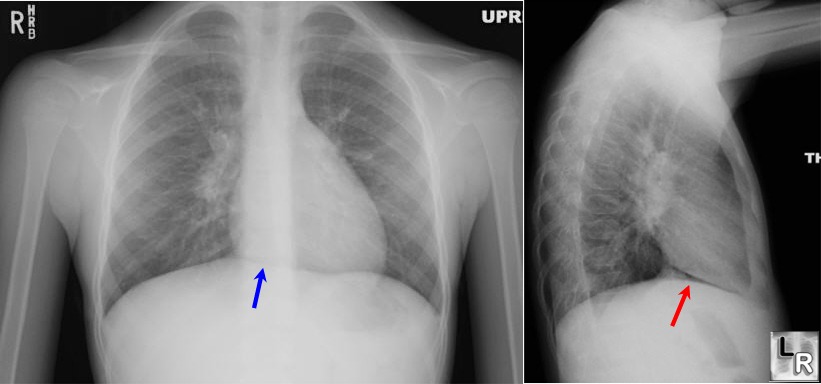 The two minute talks this week were based around “the use of...” various drugs. I hope that these have stimulated some thought....and curiosity about other drugs you use regularly. It is important as you continue in your training to give increasing thought to the reasons and evidence behind the guidelines and advice associated with drugs.
Gentamicin: (SS) a drug with a narrow therapeutic window. Various methods exist for monitoring gentamicin levels. The aim is to give the correct dose (to achieve levels high enough for effect and low enough to be safe). It is because dose calculations do not always predict the correct dose that levels must be monitored to allow fine tuning of dose and frquency.
Thrombolytics (HJ) nostalgia prompted my question about fibrinolytics (apologies). Another drug with significant risks to balance against benefits. Before PCI was easily available the decision for patients with a relative contra-indication was thrombolyse or nothing and greater risks may have been accepted than would now be appropriate.
Amiodarone (JB) the ‘greedy’ anti-arrythmic with a bit of each class activity, broad spectrum activity and plenty of drawbacks. Time to review the Vaughn Williams Classification, but before you do revise, the cardiac action potential. I used to find it difficult to understand the why particular drug classes had their effects until tied them in with the action potential and the fact, that escaped me for years, that the fast depolarisation channel in the SA node and AV node is calcium rather sodium mediated.
Heparin (R) I hold my head in shame. I did not know that heparin could produce hyperkalaemia yet the Oxford textbook says hyperkalaemia occurs in 7% of heparin treated patients due to inhibition of aldosterone production. I will be on the look out now.
Warfarin (HA) I now know that vitamin K is named for Koagulation. You now know why we need to continue heparin for a couple of days after the INR is therapeutic. That pesky protein C.
For next week you are excused the two minute tutorials but sentenced to the three minute tests. You will be asked to give the initial management of an emergency. There aren’t that many possibilities, so get revising.
The paper discussed on Tuesday was Thoughts for new medical students at a new medical school, Richard Smith. By the way, have you read his articles about Dumfries? How about leaving your advice for newly appointed house officers in the comments? I’ll post it with your photo in the hall of fame if you like.
For next Tuesday I would like you to read In a stew. Michael A Lacombe. American Journal of Medicine. 1991;91:276-278. If you feel up to it, read the associated editorial Double trouble, boil and bubble. And ask yourself how I came across these articles in a journal I do not regularly read.
Interesting Topics
Pneumomediastinum
See also this link which explains the X-ray above.
MJM
Friday, November 02, 2007
wardround 2xi7
 This week’s read and think had been The homeless man on morning rounds, an essay by J Lowenstein. If you found it interesting , you might want to read some of his collected essays in The Midnight Meal.
For next Tuesday I would like you to read Thoughts for new medical students at a new medical school, Richard Smith BMJ 2003;327:1430-1433 (20 December),
…and tell me which is your favourite box in the paper.
This week’s two minute tutorials were themed around respiratory problems, addressing the respiratory history (nicely done SS, don’t forget occupational history); PFTs (needed a bit more work on transfer factor etc, KM); ABGs (good clear talk AA; NIV (you should have been able to explain why BiPAP helps, HA); The assessment of a breathless patient (quite rightly focussed on practical issues such as beginning treatment and assessment at the same time, getting help, IV access etc, but was a four minute talk in two minutes, JB).
For next week the theme is “The use of…”
Warfarin HA
Heparin JR
Gentamicin SS
Amiodarone JB
Thrombolytics HJ (are they really fibrinolytics?)
Two minutes please, keep it concise yet precise. Arm yourself, intellectually, to ward off those probing questions.
Interesting topics this week
Hyponatraemia again
Vasculitis
MJM
Subscribe to:
Posts (Atom)