Our discussion paper last week was The reading for discussion on Tuesday will be DNR or PEACE. J Crampton. BMJ 2008;336:1015. An interesting discussion ensued. If you would like to read more on the subject could I suggest you take a look at Decisions relating to cardiopulmonary resuscitation A joint statement from the British Medical Association, the Resuscitation Council (UK) and the Royal College of Nursing from October 2007
For next Tuesday the reading will be Liz Wager: Training and the placebo effect.
Our talks this week were about poisoning, and overall I think they were well researched and presented as spoken mini-essays. I would like you, now, to think about these talks in a different way. The aim is to teach/train/educate your audience. This differs from writing an essay (or giving presentations, which are much the same thing) as you have done in the past. Those were to assess your ability to collect and critically appraise information. I want you to take that information and teach me and your colleagues. And by teach, I mean convert me from someone who could not do something into someone who can. Your handout is for that purpose as well.
Bear that in mind for this week's two minute talks on endocrine emergencies:
Hypoglycaemia A
Thyrotoxic Storm E
DKA N
Adrenal crisis Y
Phaeochromcytoma crisis S
Interesting topics
Antibiotics and seizures
MJM
Sunday, May 18, 2008


Friday, May 09, 2008
Wardround 9v8
Our discussion this week, in the absence of a paper to read, was about improving practice by Morbidity and mortality meetings. We will now run an M&M meeting on the last Thursday of each month. There is an M&M folder in the Nurses office. All deaths for the month should be listed there. The GAJ team will review MJM patients and vice versa. The Necessary patients notes will need to be pulled the week before.
Our two minute talks were about the investigation of malignancy of unknown origin. A useful discussion I think. We heard about the more common cancers nad discussed how that should guide our history, examination and investigation. The use of tumour markers produced further discussion, which can I think be generalised to the use of many tests in medicine.
For next week:
The reading for discussion on Tuesday will be DNR or PEACE. J Crampton. BMJ 2008;336:1015
Read it, think, and share your thoughts.
The two minute talks for Friday will be about Poisoning:
Paracetamol (ST)
Carbon Monoxide (NV)
Methanol (EM)
Tricyclics (YA)
The usual advice. Keep it concise and precise, quote your sources and make a handout. Having heard your talk I should be able to manage a poisoned patient. The handout should be visual rather than textual. Example.
Interesting Topics
Do you know what streptococcal toxic shock is? UpToDate also has some good articles on the subject.
MJM
Monday, April 28, 2008
Wardround 25iv8
The discussion this Tuesday began with the paper The strange malady of Alessandro’s uncle, Neil A (Tony) Holtzman. I was prompted to choose the paper following the journal club discussion last week about the genetic markers for responses to warfarin. The paper describes the development of a new (genetic) investigation and treatment and its impact on the aforementioned uncle. Many interventions will appear better than they prove to be when evidence is limited.and the passage of time gives more accurate assessments.
The paper for discussion next week will be Screening for MRSA, M Wilcox, BMJ 2008;336:899-900
The two minute tutorials on diagnoses were well done but I would recommend adding an additional aliquot of thought to the planning stage. Ask yourself, “what do I want the listener to be able to do or know after this two minutes?” Detailed discussion of diagnostic criteria may contain all the necessary information but that alone does not complete the task. Keep the handout to one side of A4 and make it memorable. Ask yourself the questions MJM or GAJ might ask. Be honest with yourself about the handout. Would you read or keep somethiong that can be printed from a website in 10 seconds? What would be more useful?
Next week’s talks are about Colitits: epidemiology, investigation, treatment.
MJM
The paper for discussion next week will be Screening for MRSA, M Wilcox, BMJ 2008;336:899-900
The two minute tutorials on diagnoses were well done but I would recommend adding an additional aliquot of thought to the planning stage. Ask yourself, “what do I want the listener to be able to do or know after this two minutes?” Detailed discussion of diagnostic criteria may contain all the necessary information but that alone does not complete the task. Keep the handout to one side of A4 and make it memorable. Ask yourself the questions MJM or GAJ might ask. Be honest with yourself about the handout. Would you read or keep somethiong that can be printed from a website in 10 seconds? What would be more useful?
Next week’s talks are about Colitits: epidemiology, investigation, treatment.
MJM
Sunday, April 20, 2008
Wardround 18iv8
 Back on-line.
The reading for Tuesday will be The strange malady of Alessandro’s uncle, Neil A (Tony) Holtzman. BMJ 2007;335:1306-1307, (doi:10.1136/bmj.39407.647014.80). Read it and think, then share your views.
The two minute talks for Friday will be Making a diagnosis: you can decide among yourselves who will make each presentation.
What constitutes Diabetes mellitus?
What constitutes COPD?
What constitutes Coronary artery disease?
What constitutes Delirium?
Two minutes please. practice it and make sure your timing is accurate. be concise and precise, quote your sources.
Interesting topics
Hypereosinophilic syndrome or look in uptodate which has an excellent article on the subject.
And here is an article worth a read, Blood Eosinophilia: A New Paradigm in Disease Classification, Diagnosis, and Treatment, A Tefferi, Mayo Clin Proc. 2005;80:75-83
MJM
Thursday, April 03, 2008


Saturday, March 08, 2008
Wardround 7iii8

Last week's talks were about substance abuse: acute management and harm reduction. Good talks, full of useful information but the handouts were a little to bulky for my liking...try something that can be taken in with one or two glances rather than a page that requires reading. Have a look at this as an example. This would probably be the equivalent of all the talks at a Friday meeting.
What pearls have I taken away from these talks? (if I've missed a good one just add it to the comments section)
Myocardial sensitisation to catecholamines with solvent inhalation: aim for calm and quiet surroundings, monitor cardiac rhythm and use sedation if necessary. The acute effects should have worn off by 6 hours , and if not consider a complication such as myocarditis.
In acute alcohol withdrawal there is no one-size-fits-all regime. The benzodiazepine dosing must be titrated to control withdrawal but avoid over sedation. SIPS scoring is a good way to do this but if not in use you will have to use some common sense. (It's certainly better than using none.)
Identifying alcohol misuse in patients presenting with other conditions is important. A reported alcohol intake less than the recommended level does not exclude abuse. Be aware, ask more detailed questions (eg CAGE) if you are suspicious.
Further reading
Alcohol - problem drinking
Opiod dependence
Next week's two minute talks will be about Parkinson's disease:
Diagnosis
Management
Problems with treatment
This time try to have visual rather than written handouts. If you want to give out lists, just tell us where to find them e.g. more information at www.listsofcauses.com.
The discussion for Tuesday will be "Should doctor's who see prisoners insist hand-cuffs are removed?" You may want to read Restraint of detainees in NHS facilities.
MJM
Sunday, March 02, 2008
Wardround 29ii8
 The talks this week were about interstitial lung diseases. You are getting the hang of it now; Information targeted at clinical practice and delivered so as to be memorable. The best talk/handout this week was Extrinsic allergic alveolitis (Dr NNT). Remember to ask about activities up to 6 hours before the onset of acute dyspnoea. Always consider infective causes. (I have a feeling that I need to take care not to evolve into an Infectious Diseases evangelist.)
For next week the assignments are based on substance misuse:
Glue (MR)
Alcohol (NNT)
Cocaine (KL)
Crystal Meth (R)
Two minutes please on the management of acute toxicity and harm reduction.
The reading last week was Doctors’ education: the invisible influence of drug company sponsorship. Ray Moynihan. BMJ 2008;336:416-417. You may want to have a look at Who pays for the pizza? by the same author.
For next Tuesday I would like you to read and think about Junior doctors' shifts and sleep deprivation. Carol Black et al, BMJ 2005;330:1404.
You may want to test your own level of tiredness with this online psychometric test
Interesting topics
Alternative causes for elevated cardiac troponin levels.
Ann Intern Med 2005;142:786-791
Clozapine myocarditis
Marfan's Syndrome
MJM
Monday, February 25, 2008
Wardround 22ii8
The reading for Tuesday will be, Doctors’ education: the invisible influence of drug company sponsorship. Ray Moynihan. BMJ 2008;336:416-417 (23 February).
There is an extended podcast on rheumatoid arthritis, with slides available (60 minutes duration) at the training site.
MJM
There is an extended podcast on rheumatoid arthritis, with slides available (60 minutes duration) at the training site.
MJM
Sunday, February 17, 2008
Wardround 15ii8
A good attempt (first/second stabs) at the two minute talks on Friday. Much effort for so little gain. But this is the point of training...getting better. Next week we have Neuropathy as our topics, split into acute, subacute and chronic. Ask yourself "what do I want to learn?" "what do I want my colleagues to remember?" " how can I get he message accross so they remember?"
Then prune it to two minutes, keep it concise and yet precise and quote your sources. make a handout to get the message accross. And be realistic; no one will read a 400 word A4 handout but they will glance at pictures. And another piece of advice. Have the handouts ready before the wardround starts.
Here is my old podcast on Neuropathy
It won't be visible inside DGRI but it is also available here.
The reading for Tuesday is The Interpreter of Facts, HW Horowitz. JAMA 2008; 299: 497-498.
Get it from the elibrary, or be old-fashioned and caress the journal in your own hands. Read and think.
Interesting Topics
Status Epilepticus
MJM
Then prune it to two minutes, keep it concise and yet precise and quote your sources. make a handout to get the message accross. And be realistic; no one will read a 400 word A4 handout but they will glance at pictures. And another piece of advice. Have the handouts ready before the wardround starts.
Here is my old podcast on Neuropathy
It won't be visible inside DGRI but it is also available here.
The reading for Tuesday is The Interpreter of Facts, HW Horowitz. JAMA 2008; 299: 497-498.
Get it from the elibrary, or be old-fashioned and caress the journal in your own hands. Read and think.
Interesting Topics
Status Epilepticus
MJM
Sunday, February 10, 2008
Wardround 8ii8

The reading for Tuesday is Clinical craft: a lesson from Liverpool. D M Gore. Journal of Medical Ethics 27:74-75 (2001). Read and think.
The talks this week were about rheumatological presentations to admissions units. Well done to Dr Lewin for a well presented (and acutely timed) talk on the red eye, diarrhoea, sore joints syndrome, and with little warning. It is worth having a looke at the recently produced guidelines for the hot swollen joint. By the way (SZ) it wasn't that difficult to find, being the second hit when I googled it. You might want to see my summary sheet. In dealing with the various scenarios, I would recommend differentiating joint/muscle symptoms with or without objective signs and with or without involvement of other organ systems. SIRS is sepsis until you know otherwise.
The talks for next week are about stroke. Thrombolysis (NN), anti-platelet treatment (MR) and surgical treatments (KL). Two minutes please, keep it precise and concise, quote your sources and give a handout you would be proud to be shown in twenty years....yes I am that cruel.
Interesting topic
Pulmonary Embolism
Hereditary Thrombophilia
MJM
Sunday, February 03, 2008
Wardround 1ii8

The Reading for next Tuesday is Waste in the NHS, Andrew Moore, Bandolier Extra, February 2002. Give yourself time to read it, then let's hear what you think.
The two minute talks this week were about Gram stained rods and cocci. You should now be able to target appropriate antibiotics a little better. Don't ever think "I'll use a broad spectrum antibiotic".....plan the spectrum to cover the clinical situation.
The talks for next week will be about rheumatological emergencies.
The single hot joint SZ
Generalised myalgia/arthralgia CG
Red eye, diarrhoea, and sore joints PM
A two minute talk please, keep it concise and precise, quote your sources and provide a one sheet handout.
Interesting topics
Helicobacter
MJM
Friday, January 25, 2008
Wardround 25i8

Our discussion this week was about ethics. The use of jokes which might offend, open-ness with patients, harrassment, ethics committees, politics and medicine all had their moment. It can be helpful to think out loud. For next week the discussion will be about the ethics of offering or declining transplantation to a patient with several co-morbid conditions and difficulty adhering to established models of care.
You will have an opinion (that’s an order). But why do you have that opinion? Can you see why others may have a different opinion? Who is right? How can you best structure the problem for analysis? Would an ethics committee help? How? How can you recognise whether you are virtuous (in your decision) or lacking both virtue and insight?
The two minute talks this week were about urinary tract infections. I hope you have learnt about the subject and your methods of research. Did you ask ‘why?’ when you should have done?
Next week is microbiology. You get a phone call from bacteriology. The blood culture is positive for: G+R (MG), G-R (NS), G+C (SZ), G-C (CG). You have been given a little background to work on. So what do you want to know? Each result should ring some bells of recognition and some alarms. Give the group two minutes on your case.
Interesting topics
Pernicious anaemia
Behcet’s and thalidomide
MJM
Sunday, January 20, 2008
Wardround 18i8
The ethical dilemmas to read for Tuesday are to be found here and then An ethical dilemma, BMJ 2001;322: 1236-1240.
Tutorials for Friday (Urinary infections)
Interesting Topics
PICC lines (This is I think the original poster and can be read without visual aids )
MJM
Tutorials for Friday (Urinary infections)
Interesting Topics
PICC lines (This is I think the original poster and can be read without visual aids )
MJM
Sunday, January 13, 2008
Wardround 11i8
The discussion for Tuesday is this video by students. You may need to view it outside DGRI, I think youtube access will be blocked in the hospital network.
The two minute tutorial theme this week (and next week) is immunisation. We heard about Pneumococcus (NS), HiB (SZ), meningococcus (MG) and influenza (CG). A little more tweaking is needed to get the essential information into two minutes. For next week we will hear about: BCG, smallpox, polio and Hep B. Any audits spring to mind?
Two minutes please. Identify what you think is the essential information to get across, and remember that diluting that with waffle/unimportant points will impair meme transfer.
Interesting topics.
Pancreatitis
Trimethoprim and creatinine
MJM
The two minute tutorial theme this week (and next week) is immunisation. We heard about Pneumococcus (NS), HiB (SZ), meningococcus (MG) and influenza (CG). A little more tweaking is needed to get the essential information into two minutes. For next week we will hear about: BCG, smallpox, polio and Hep B. Any audits spring to mind?
Two minutes please. Identify what you think is the essential information to get across, and remember that diluting that with waffle/unimportant points will impair meme transfer.
Interesting topics.
Pancreatitis
Trimethoprim and creatinine
MJM
Friday, January 04, 2008
Wardround 4i8
 Happy new year for 2008. May your knowledge expand, ignorance regress and wisdom blossom.
The reading for Tuesday 8 january will be The practice of clinical medicine as an art and as a science , John Saunders, Journal of Medical Ethics 26:18-22 (2000).
The two minute tutorial theme for friday is immunisation: there is a medscape CME session which covers five main areas (a page each). Your task is to read the page allocated to you and translate it into UK guidance for the rest of us.
There is a 'Green book' issued in the UK with guidance on immunisation so you could look into that for inspiration. You can find an on-line version here.
Pneumococcus NS
HiB SZ
meningococcus MG
influenza CG
polio SS
Two minutes maximum, keep it concise and precise with an A4 size handout to make it clearer. Don't put all the info on the handout, just the essentials.
Interesting topics
candida glabrata
colchicine for gout
MJM
Friday, December 14, 2007

Our two minute talks this week were about malaria. I have put in links for the HPA malaria page and CDC malaria page as well as the UK guidelines: HPA Advisory Committee on Malaria Prevention in UK Travellers, UK malaria treatment guidelines. Journal of Infection 2007; 54(2):111-21
KG’s handout for malaria prophylaxis has been voted into the permanent collection.
Please remember that the talks need to be precise and the source of information quoted so that its authenticity can be weighed. Non-UK guidance may not be appropriate to management of a condition in the UK.
For next week there will be a lighter topic choice. Two minutes on a film or book which has influenced your practice of medicine, and why.
The paper for discussion on Tuesday will be Time, Now, to Recover the Fun in the Physical Examination Rather Than Abandon It. ARCH INTERN MED 166, 603-604, MAR 27, 2006
You can get it via the elibrary.
Interesting topics
Malaria – see above.
Dr Gilchrist, welcome to the fold. Please look at the 'training' link on the right.
MJM
Monday, December 10, 2007
Wardround 7xii7
The two minute tutorials this week were acute endocrine emergencies. I will upload the Addisonoan Crisis sheet to the summary sheet section. Remember, think about hypoadrenalism in any patient with shock, especially if they have a history of steroid use.
For next week the talks are themed around Malaria:
Epidemiology HJ
Falciparum JR
Vivax (Kaur)
Malariae/Ovale NS
Acute malaria SS
Travel prophylaxis KG
Two minutes please. Concise yet precise and quote your sources. The aim is not ‘to give a talk’ but to educate by giving a talk. Those handouts deemed up to scratch will be added to the permanent collection. We know this is a difficult task, that is why we challenge you with it.
The paper for discussion on Tuesday is
Clinical decision-making: Coping with uncertainty. A F West; R R West
Postgraduate Medical Journal; Jun 2002; 78, 920.
Interesting topics
Pericardial effusions
Yohimbine
MJM
For next week the talks are themed around Malaria:
Epidemiology HJ
Falciparum JR
Vivax (Kaur)
Malariae/Ovale NS
Acute malaria SS
Travel prophylaxis KG
Two minutes please. Concise yet precise and quote your sources. The aim is not ‘to give a talk’ but to educate by giving a talk. Those handouts deemed up to scratch will be added to the permanent collection. We know this is a difficult task, that is why we challenge you with it.
The paper for discussion on Tuesday is
Clinical decision-making: Coping with uncertainty. A F West; R R West
Postgraduate Medical Journal; Jun 2002; 78, 920.
Interesting topics
Pericardial effusions
Yohimbine
MJM
Sunday, December 02, 2007
Wardround 30xi7

This week’s intellectual task, if it can be so called, was the three minute test. The score you achieved is far less important than what you learned from the exercise. When one looks up the treatment of “an emergency”, in this case (life threatening) hyperkalaemia, it is essential to see how you would enact it in real life. For example, drugs must get from the cupboard/trolley into the patient’s bloodstream and do not just magically do so as they might in your mind. When reading the book ask yourself how you would get each step done. And don't forget to get and use help efficiently.
The case began with “Doctor, the lab have rung with his results. The creatinine is 491”. Elevated creatinine levels must always be qualified with a potassium result. Your response should have been a reflex “and the potassium?” Get into the habit of feeling incomplete if you are aware of SC but not K results, and always offer both when further disseminating the information.
The reading for Tuesday is Truth, stardust and comfort blankies by “ Aphra Behn”, presumably a nom de plume.
We are failing the great moral test of our times and retreating into the comfort of a new mediaevalism, surrounding ourselves with ideology... and warm and righteous certainties .... Discuss.
The two minute talks for Friday will be endocrine emergencies: recognition and management.
Thyroid crisis RR
Acute hypoadrenalism MJM
DKA SS
Acute hypopit HJ
Carcinoid KG
Vipoma JB
SIADH NS
Only two minutes, keep it concise and precise. Concentrate on th emergency aspect. And remember that the goal is to educate the group. Education achieved is not proportional to the number of words spoken. A one page visual aid is allowed.
Interesting topics
Thunderclap headache, uptodate has a good article
MJM
Monday, November 26, 2007
Wardround 24xi7

This week we had our occasional quiz. You will know, in your hearts and minds, two things.....what score you got and what proportion of your correct answers you guessed. Your next task is to revise the areas of which you were unsure.
For next week:
The reading for Tuesday will be What's wrong with the wards? K Teale BMJ 2007;334:97 (13 January).
The two minute tutorials are suspended again on Friday, to be replaced by the 3 minute emergency quiz. bring a pen and piece of paper.
Interesting topics
Duodenal ulcer
MJM
Saturday, November 17, 2007
Sunday, November 11, 2007
Wardround 9xi7
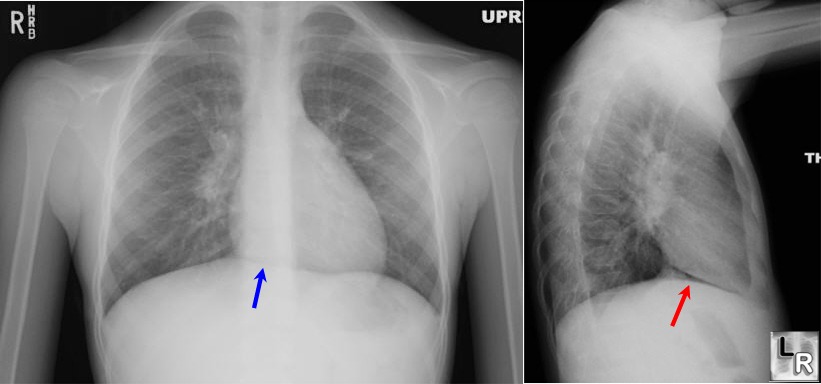 The two minute talks this week were based around “the use of...” various drugs. I hope that these have stimulated some thought....and curiosity about other drugs you use regularly. It is important as you continue in your training to give increasing thought to the reasons and evidence behind the guidelines and advice associated with drugs.
Gentamicin: (SS) a drug with a narrow therapeutic window. Various methods exist for monitoring gentamicin levels. The aim is to give the correct dose (to achieve levels high enough for effect and low enough to be safe). It is because dose calculations do not always predict the correct dose that levels must be monitored to allow fine tuning of dose and frquency.
Thrombolytics (HJ) nostalgia prompted my question about fibrinolytics (apologies). Another drug with significant risks to balance against benefits. Before PCI was easily available the decision for patients with a relative contra-indication was thrombolyse or nothing and greater risks may have been accepted than would now be appropriate.
Amiodarone (JB) the ‘greedy’ anti-arrythmic with a bit of each class activity, broad spectrum activity and plenty of drawbacks. Time to review the Vaughn Williams Classification, but before you do revise, the cardiac action potential. I used to find it difficult to understand the why particular drug classes had their effects until tied them in with the action potential and the fact, that escaped me for years, that the fast depolarisation channel in the SA node and AV node is calcium rather sodium mediated.
Heparin (R) I hold my head in shame. I did not know that heparin could produce hyperkalaemia yet the Oxford textbook says hyperkalaemia occurs in 7% of heparin treated patients due to inhibition of aldosterone production. I will be on the look out now.
Warfarin (HA) I now know that vitamin K is named for Koagulation. You now know why we need to continue heparin for a couple of days after the INR is therapeutic. That pesky protein C.
For next week you are excused the two minute tutorials but sentenced to the three minute tests. You will be asked to give the initial management of an emergency. There aren’t that many possibilities, so get revising.
The paper discussed on Tuesday was Thoughts for new medical students at a new medical school, Richard Smith. By the way, have you read his articles about Dumfries? How about leaving your advice for newly appointed house officers in the comments? I’ll post it with your photo in the hall of fame if you like.
For next Tuesday I would like you to read In a stew. Michael A Lacombe. American Journal of Medicine. 1991;91:276-278. If you feel up to it, read the associated editorial Double trouble, boil and bubble. And ask yourself how I came across these articles in a journal I do not regularly read.
Interesting Topics
Pneumomediastinum
See also this link which explains the X-ray above.
MJM
Friday, November 02, 2007
wardround 2xi7
 This week’s read and think had been The homeless man on morning rounds, an essay by J Lowenstein. If you found it interesting , you might want to read some of his collected essays in The Midnight Meal.
For next Tuesday I would like you to read Thoughts for new medical students at a new medical school, Richard Smith BMJ 2003;327:1430-1433 (20 December),
…and tell me which is your favourite box in the paper.
This week’s two minute tutorials were themed around respiratory problems, addressing the respiratory history (nicely done SS, don’t forget occupational history); PFTs (needed a bit more work on transfer factor etc, KM); ABGs (good clear talk AA; NIV (you should have been able to explain why BiPAP helps, HA); The assessment of a breathless patient (quite rightly focussed on practical issues such as beginning treatment and assessment at the same time, getting help, IV access etc, but was a four minute talk in two minutes, JB).
For next week the theme is “The use of…”
Warfarin HA
Heparin JR
Gentamicin SS
Amiodarone JB
Thrombolytics HJ (are they really fibrinolytics?)
Two minutes please, keep it concise yet precise. Arm yourself, intellectually, to ward off those probing questions.
Interesting topics this week
Hyponatraemia again
Vasculitis
MJM
Monday, October 29, 2007
Wardround 26x7
The paper for discussion on Tuesday will be The homeless man on morning rounds from The Midnight Meal and Other Essays about Doctors, Patients, and Medicine by Jerome Lowenstein. I have left a copy on the ward. ...and what is a home?
The two minute tutorials for Friday will have a respiratory theme.:
A respiratory history SS
PFTs KM
CXR interpretation HJ
ABG interpretation AA
The approach to the (acutely) breathless patient JB
NIV HA
These will be a challenge. Remember to keep it concise yet precise. Don't try to squeeze too much information in. Produce a handout and quote your sources.
Interesting topics:
Has Chlamydia changed to Chlamydophila?
The two minute tutorials for Friday will have a respiratory theme.:
A respiratory history SS
PFTs KM
CXR interpretation HJ
ABG interpretation AA
The approach to the (acutely) breathless patient JB
NIV HA
These will be a challenge. Remember to keep it concise yet precise. Don't try to squeeze too much information in. Produce a handout and quote your sources.
Interesting topics:
Has Chlamydia changed to Chlamydophila?
Thursday, October 25, 2007
Extra-articular RA
A brief talk about extra-articular disease in RA.
If you cannot see the pictures look at this other version.
Monday, October 08, 2007
Wardround 5x7

Thank you for the talks on skin infection which I very much enjoyed. I hope you now have a background knowledge to help you choose, or guide the choice, of antibiotics and their route of administration. Remember to ask yourself "what can I do to reduce the likelihood of recurrence?" when you see a patient with these disorders. What would you do?
The two minute talks for next weekwill be on Atrial Fibrillation: two minutes please on the topics listed. Keep it concise yet precise, educate yourself and your colleagues, and quote your sources. Keep the info sheet short and simple.
assessing thrombotic risk AA
the case for rate control SYC
the case for rhythm control KM
If anybody else wishes to join the group they must bring a two minute talk.
I do not think there will be time for a discussion paper on Tuesday (reasons will become obvious) but for next week I would like you to read Risk: aspirin or car? in Bandolier. The original paper this refers to is available via the elibrary and is worth a look especially the discussion section.
What's More Dangerous, Your Aspirin Or Your Car? Thinking Rationally About Drug Risks (And Benefits). Cohen, Joshua T.; Neumann, Peter J.. Health Affairs, May/Jun2007, Vol. 26 Issue 3, p636-646; DOI: 10.1377/hlthaff.26.3.636
Interesting topics this week:
Erythromelalgia
Pseudobulbar palsy.
MJM
Monday, September 24, 2007
21ix7

Our two minute talks last week were based on the investigation of abnormal LFTs but we got sidetracked into the interpretation of hepatitis B serology. This was I hope a useful time both for the specifics of understanding HepB serology and the general point of structuring your knowledge in a way which is useful for practical use. When learning a new topic, or revising an old one remember that the way it is structured in the textbook may need translating to make it easier to remember or apply.
Test yourself…which tests are useful for:
Assessing response to Hep B immunisation?
Checking for previous contact with Hep B?
Acute hepB?
Chronic Hep B?
Next is Opportunistic infection (in HIV)
Pneumocystis SYC
Cytomegalovierus AA
Atypical Mycobacteria AA
Kaposi’s MR
Two minutes please. Keep it precise and concise, quote your sources and educate your colleagues.
Last week’s discussion was about waste and how we might address the problem. This week we will discuss Measuring quality of life. Is there such a thing as a life not worth living? B. Farsides, RJ Dunlop BMJ 2001;322:1481-1483.
Next week the Tuesday discussion will be replaced with (by?) a quiz.
Interesting topics
PEG tubes
Aortic stenosis: indications for valve replacement in adults (uptodate)
MJM
Sunday, September 16, 2007
Wardround 14ix7

The two minute talks for next week will be about the appropriate use of investigations in the patient with abnormal LFTs. Tell me how to use and interpret:
Viral tests AA' s successor
autoimmune serology (and metabolic tests if you can fit it in) MR
imaging SYC
The paper for discussion on Tuesday is WASTE IN THE NHS: THE PROBLEM, ITS SIZE, AND HOW WE CAN TACKLE IT. Andrew Moore, Bandolier.
For Tuesday 25th the discussion paper is Measuring quality of life. Is there such a thing as a life not worth living? B. Farsides, RJ Dunlop BMJ 2001;322:1481-1483.
Interesting topics:
Sheffield tables
ETTs - have a look at Ordering and Understanding the Exercise Stress Test by M Darrow.
Aspirin primary prevention there is much written on this, but you have to start somewhere
Monday, September 10, 2007
Wardround 7ix7
The two minute talks for next Friday will be on the Organisms causing community acquired pneumonia and their associated clinical syndromes. Two minutes please on:
Pneumococcus AA
Mycoplasma SYC
Chlamydia (has its name chasnged?)
Legionella MR
The paper for discussion a week on Tuesday will be WASTE IN THE NHS: THE PROBLEM, ITS SIZE, AND HOW WE CAN TACKLE IT. Andrew Moore DSc, Editor of Bandolier.
MJM
Pneumococcus AA
Mycoplasma SYC
Chlamydia (has its name chasnged?)
Legionella MR
The paper for discussion a week on Tuesday will be WASTE IN THE NHS: THE PROBLEM, ITS SIZE, AND HOW WE CAN TACKLE IT. Andrew Moore DSc, Editor of Bandolier.
MJM
Monday, September 03, 2007
Wardround 31viii7
The ophthalmoscope, stethoscope, pulse oximeter, otoscope and sphygmomanometer all explained in less than half an hour...what an achievement. I still remain uncertain about the correct cuff size for a sphyg. The AHA arec quoted as saying Proper cuff size selection is critical to accurate measurement. The bladder length and width of the cuff should be 80% and 40%, respectively, of the arm circumference. Blood pressure measurement errors are generally worse in cuffs that are too small vs those that are too big. That sounds like an audit just waiting to happen.
For next week we will ahve two minute talks on practical procedures:
Blood cultures (including from lines) GAJ
Chest drain insertion AA
LP AW
Ascitic tap AG
Joint aspiration MJM
The paper for discussion this week was What patients want to know about adverse events. Whatever we may think, the people who took part in this study wanted to know just about everything. We may disagree or have reasons why we believe this is impractical, but should not dismiss it out of hand. Try asking a patient "What do you want to know about this treatment?" next time you suggest something.
The paper for discussion on 11 September is....to be decided.
Interesting topics
Haemolysis
MJM
For next week we will ahve two minute talks on practical procedures:
Blood cultures (including from lines) GAJ
Chest drain insertion AA
LP AW
Ascitic tap AG
Joint aspiration MJM
The paper for discussion this week was What patients want to know about adverse events. Whatever we may think, the people who took part in this study wanted to know just about everything. We may disagree or have reasons why we believe this is impractical, but should not dismiss it out of hand. Try asking a patient "What do you want to know about this treatment?" next time you suggest something.
The paper for discussion on 11 September is....to be decided.
Interesting topics
Haemolysis
MJM
Monday, August 27, 2007
Wardround 24viii7

Thank you for your ideas about the cause of the plague in Athens. If you want to read more there is much to be found on the internet. If you would like to see a published discussion about the plague of Athens have a look at The cause of the plague of Athens: plague, typhoid, typhus, smallpox, or measles? Burke A. Cunha, Infect Dis Clin N Am 18 (2004) 29–43.
The two minute talks for this week will be about instruments in medicine:
Ophthalmoscope GAJ
Stethoscope AG
Saturation meter MJM
Auroscope AW
Sphygmomanometer AA
Two minutes please. Keep it precise and concise, and quote sources.
The reading for next week (4ix7) will be Metaphorical Medicine: using metaphors to enhance communication with patients who have pulmonary disease. Arroliga AC et al. Ann Intern Med. 2002 Sep 3;137(5 Part 1):376-9
MJM
Monday, August 20, 2007
Wardround 17viii7
 The Roth Spot is a white-centered hemorrhage. It is a cotton wool spot surrounded by hemorrhage. The cotton wool comes from ischemic bursting of axons; the small hemorrhage comes from ischemic bursting of a pre-capillary arteriole. It is not specific to bacterial endocarditis.
I will scan in this week's handouts on HSVE and JE. The prize for best talk this week goes to Dr Anderson for a novel way of presenting the information about Japanese encephalitis.
Herpes simplex encephalitis
Japanese encephalitis
The talks this week are your diagnostic choices for the plague of Athens. Read the article and come up with a diagnosis. You have two minutes to convince the group you are correct.
The History of the Peloponnesian War written by Thucydides in 431 B.C. If you click on the link it will take you to a copy of the piece. The web page begins with chapter VI, but you can skip down to chapter VII (unless you would like to read about the war). If you cannot find the right section, press ctrl-F and type in plague.
Don't forget to read Does this patient have abnormal central venous pressure? Cook, Deborah J; Simel, David L JAMA; Feb 28, 1996; vol 275 (8): 630-634, for Tuesday.
Interesting topics
MJM
Monday, August 13, 2007
Wardround 10viii7

This week’s talks were about common drugs.. Coamoxiclav, Loop diuretics, LMWH and aspirin. You will become aware over time that I tend to be impressed by talks with a practical bent to them. So I may not care that furosemide is protein bound, but I am very interested that its effectiveness may be impaired in nephrotic syndrome due to the drug remaining bound to protein in the tubular lumen, since I need to give higher doses. It was good to see sources quoted. The week’s prize to Dr Reidy: good handout, sources quoted and an interesting slant on aspirin.
The reading last week had been A Necessary Inhumanity? Ruth Richardson. Journal of Medical Ethics 2000;26;104-106. The inhumanity discussed is apparently developed by doctors, for our own protection and to allow us to provide better care. We call it clinical detachment. I have no douibt that some doctors are inhumane, as her examples illustrate, but are we all? I do not think that I am inhumane when I remain calm (detached from the expected emotional response) in the face of severe illness in my patient. What do you think?
The talks for the coming week are related to encephalitis:
Herpes simplex encephalitis Dr Reidy
West Nile Virus Encephalitis Dr Waters
Japanese encephalitis Dr Anderson
Cerebral lupus Dr Ghanbari
The reading for next week is Does this patient have abnormal central venous pressure? Cook, Deborah J; Simel, David L JAMA; Feb 28, 1996; vol 275 (8): 630-634
Interesting topics
Staphylococcal septicaemia, excellent articles in uptodate.
MJM
Friday, August 03, 2007
Wardround 3viii7

The new session begins and with next to no warning the new batch came up with two minute talks on the normal ECG. We heard about the p wave from Dr Ghanbari, PR interval from Dr Waters, QRS from MJM, ST from Dr Reidy, T wave from Dr Anderson and Axis from Dr Cameron. You can see a brief resume of a normal ecg here. The prize for best talk goes to Dr Cameron for making a difficult topic so simple that a big brother halfwit would understand it.
Now that you have all had a chance to see how the talks are done I can give the assignments for next week and be a bit more insistent about the rules. Next week’s two minute tutorials will be on common drugs:Low molecular weight heparin (Dr Waters)
Aspirin (Dr Reidy)
Co-amoxiclav (Dr Anderson)
Loop diuretic (or was it PPI?) (Dr Ghanbari)
Keep it concise yet precise. Practical rather than theoretical. Heretical if you must. Produce a handout and quote your sources. This is helpful for your colleagues. If they find it interesting they can go and read it themselves.
Next Tuesday’s reading you already have. For the Tuesday after we will read The homeless man on morning rounds, from The midnight meal and other essays about doctors, patients and medicine. By Jerome Lowenstein. I will put a copy on the ward next week.
Interesting topics arising this week:
Aspiration Pneumonia, good article on Uptodate
Tuesday, July 31, 2007
Welcome to Ward 10
 Farewell to the old guard and welcome to the new batch. Get ready to gorge yourself on fruit from the tree of knowledge.
This blog will be a reminder of your training assignments each week. In addition to your usual training there are two recurring assignments:
Two minute presentations
You will give a two minute presentation to the team each Friday. The topic for your talk each week will be recorded here. The aim is to enlighten yourself and your colleagues about the subject. You are only allowed two minutes (we have a timer) so don’t waste time waffling about why you chose to talk about the subject, just get down to it. This is a difficult task but not impossible, many have done it before you. The sources of your information should be mentioned. An A4 size handout is encouraged. Have a look at this example... Anaphylaxis by Dr Hannah Gunn, or this slightly busier one on aspiration pneumonia by YT. The talk is more important than the handout so use your time appropriately.
Read and think
There is a paper to read each week. These are to stimulate discussion so read them in good time so you have time to think before we discuss them on Tuesdays.
You will be given timetables for wardrounds, clinics etc when you arrive.
The read and think for next week will be
A Necessary Inhumanity? Ruth Richardson. Journal of Medical Ethics 2000;26;104-106
You should be able to get the PDF using your Athens password.
MJM
Sunday, July 01, 2007
Wardround 29vi7

Our two minute talks this week were about endocrine disorders, specifically the clinical features of hypoadrenalism, hypothyroidism and hyperprolactinaemia. This has stimulated me to be more aware of prolactin levels in my patients with unexplained symtoms.
For next week we will be focussing on the eye with topics of the sore/red eye, visual loss and diplopia. So two minutes please on the work up and management of patients with these common problems.
The reading for next week will be Does This Patient Have Temporal Arteritis? Smetana and Shmerling. JAMA.2002; 287: 92-101. Get it via the elibrary. Hopefully we can start the meeting on time and be able to discuss the paper this time.
Interesting topics
Miller-Fisher Syndrome
And for those who fancy a trip to the real library, why not have a look at An unusual variant of acute idiopathic polyneuritis (syndrome of ophthalmolplegia, ataxia and areflexia). M Fisher:
New England Journal of Medicine, 1956, 255: 57-65.
MJM
Wednesday, June 27, 2007
Tardy wardround

Sorry folks. The posting is late this week due to foreign travel and computer problems.
I will just cut to the quick and give next week's reading:
BMJ 2003;326:151 ( 18 January )
Filler
EndpieceA good physician versus no physician
The difference between a good physician and a bad one is certainly very great; but the difference between a good physician and no physician at all, in many cases, is very little.
If during the course of the common epidemic diseases which occur in this island every spring and autumn, two hundred patients were taken promiscuously, and one half delivered to the care of the faculty to be treated according to the art; that is, as private patients by whom they are fee'd every time they prescribe, and the other half delivered to the care of nurses, instructed to give them no physic whatever, but merely cooling drinks, and such light and simple foods as the patients' appetites might lead them to, I am convinced the world would be a good deal surprised at the result of the experiment.
J Moore, Medical Sketches. London: A Strahan and T Cadell, 1786
Jeremy Hugh Baron, honorary professorial lecturer, Mount Sinai School of Medicine, New York
Remember that a short read means more time for reflection.You already have your assignments for two minute talks on endocrine dysfunctions.
MJM
Saturday, June 16, 2007
EULAR
The EULAR meeting has been interesting and thought provoking. As well as the usual expected tide of data regarding biologics efficacy and safety, there has been a growing focus on strategies for treating Rheumatoid disease. More of which over the next few days.
Other sessions included neuroendocrine and intracrine influences on RA, circadian rhythms, SLE and crystals.
I hope the team back on Ward 10 will choose a subject for the two minute talks next week.
MJM (Barcelona)
Other sessions included neuroendocrine and intracrine influences on RA, circadian rhythms, SLE and crystals.
I hope the team back on Ward 10 will choose a subject for the two minute talks next week.
MJM (Barcelona)
Sunday, June 10, 2007
Wardround 8vi7

 The two minute talks this week were stimulated by a recent case of tetanus. We heard about the toxin effects of Tetanus (J Wallace); C. diff (G Bell); Botulism (N Mohan); Staph Toxin (L Frame). Very interesting topics. I was not aware of the neuromuscular effects of aminoglycosides. My prize goes to NM. You can find out more trivia about botulism at Naveen’s blog.
For next week’s talks we will address the four giants of geriatrics. Our mental search for the fifth giant reminded me of Terry Pratchett’s fifth horseman of the apocalypse. I once did a podcast on the subject and remain taken by the thought of that fifth horseman, Ronnie, who left before they became famous. The assignments for next Friday are:
Falls (MJM’s SHO)
Delirium (KL)
Incontinence (JW)
Immobility (NM)
Two minutes please. Keep it precise and concise, quote your sources and make a one page handout that is so perfect people will want to keep a copy to show their grandchildren. Given the subject matter I would prefer that you avoided practical demonstrations, especially JW.
The paper discussed this week was The dogged physical examination in the era of the C.A.T. Riegelman K. Primary Care 1980 Dec;7(4):625-35. I hope this has stimulated each of you to think about those parts of the exam that are particularly useful, yet easily and often omitted. You might want to read the last paragraph of the previous paper as well.
For next week I would like you to read and think about: Aunt Sophie’s Choice: the perils of paternalism. Schafer A.
PS beware Pratchett's four minor horsemen of the apocralypse: panic, bewilderment, ignorance and shouting.
MJM
Sunday, May 13, 2007
Wardround 11v7

Next week’s two minute tutorials are on dangerous drugs. Two minutes please on:
Warfarin GB
Antibiotics JW
Antipsychotics LF
Aspirin R
Steroids SS
Let’s lift ourselves up...no lacklustre talks this week please. No excuses. Give the group an interesting couple of minutes on your topic.
The read and think for next week is The rational clinical examination: Is this patient clinically depressed? Williams JW, et al. JAMA 2002; 287: 1160-70.
Interesting topics:
Wegener’s granulomatosis
Diffuse alveolar hemorrhage syndromes. U Specks. Current Opinion in Rheumatology. 13(1):12-17, January 2001.
MJM
Monday, April 30, 2007
Wardround 27iv7

Next week’s two minute tutorial theme will be psychiatric disease on the medical unit. So that we might might avoid unpleasant embarrassment we will limit this to psychiatric disorders manifest by patients rather than staff.
Drug associated psychiatric disorders SS
Delerium RP
Acute psychosis DK
Depression TJ
Schizophrenia CS
Alcohol RK
Remember two minutes only. The aim is to inform the group. Keep the talks concise yet precise, and quote your sources.
The read and think last week was White coats and fingerprints: diagnostic reasoning in medicine and investigative methods of fictional detectives. C Rapezzi, R Ferrari, A Branzi. BMJ 2005;331:1491-1494 (24 December), doi:10.1136/bmj.331.7531.1491. There is additional material on bmj.com.
I feel that the discussion was rather limited so we will have another go at the same paper this week.
Interesting topics
Brain tumours
Status Epilepticus: have alook at the topic at http://www.eboncall.org/
Interesting fact: if the stroke volume of the left heart becomes reduced by 1ml compared to the right ventricle, about a litre of extra blood will accumulate in the lungs within 15 minutes.
MJM
PS why the garden of earthly delights?
Sunday, April 22, 2007
Wardround 20iv7

This week’s two minute tutorial theme was Neuropathy. SS gave us a strategy for investigation and will update/reorder it for next week. My own approach is in four steps: to classify the neuropathy as acute, sub-acute or chronic then as sensory, motor, autonomic or mixed, followed by an initial screen for the most common causes. What do you think that screen should comprise? Step four is NCS and everything else.
For next time we will review glomerulonephritis. The assignments will be:
Nephritic syndrome DK
Nephrotic syndrome LF
Classification CS (make it useful for MJM)
IgA nephropathy TJ
Membranous GN SS
Remember two minutes only. The aim is to inform, rather than hypnotise, the group so keep the talks concise yet precise, and quote your sources.
The reading for next week will be White coats and fingerprints: diagnostic reasoning in medicine and investigative methods of fictional detectives. C Rapezzi, R Ferrari, A Branzi. BMJ 2005;331:1491-1494 (24 December), doi:10.1136/bmj.331.7531.1491
Interesting topics
Trifascicular block (ECG and look it up in uptodate)
Non-epileptic attack disorder
Serratia Marcescans
MJM
Monday, April 02, 2007
Wardround 29iii7
 What is this?
This week’s talks were about diarrhoea. If you want to read more, UpToDate has overviews or acute and chronic diarrhoea. For next week the two minute tutorials will be on Neuropathy:
Acute DK
Chronic CS
Investigation SS
Treatments FY1
Diabetic JT
Alcohol related Dr R
Two minutes please . Keep if concise yet precise. Make a one page handout and quote your sources.
The reading was Clinical decision-making: Coping with uncertainty. A F West; R R West. The paper 's conclusion is :Improving scientific knowledge is clearly a laudable objective, although it may reduce clinical uncertainty less than expected. Pretending that the clinical predicament can be reduced to a series of certainties by the recruitment of "evidence" will not work and unrealistic expectations of that stratagem may make the situation worse. Some degree of uncertainty was always here to stay and evidence, even of the highest quality, is only evidence. There will always be judgments to be made by responsible, informed, and compassionate people. They may not be able to perform these broader roles, in communication, holding anxieties and managing uncertainty, unless trained for and supported in them.
The reading for next week is Clinical diagnostic strategies. Sackett DL et al. Chapter 1 of Clinical Epidemiology. I have put a copy on the ward.
Interesting topics
Monday, March 26, 2007
Wardround 23iii7
 This week’s two minute tutorials were on the investigation of a patient with abnormal LFTs. My test, if it can be called that, for each talk is to ask “Would it be useful for a new resident”. I am not sure that the talks did that. The bones of what to do and what it means seem to have been lost in the telling. Could I ask each person to post one sentence in the comments, please - on your topic.
The reading was Lying to Each Other. When Internal Medicine Residents Use Deception With Their Colleagues. Michael J. Green, et al. Arch Intern Med. 2000;160:2317-2323. An unsuspected side effect was that several of you could not access the paper. Try again. Remember to log in to the elibrary before navigating to the paper. The conclusion of the paper was, in brief, “A substantial percentage of internal medicine residents report they would deceive a colleague in various circumstances, and the likelihood of using deception depends on the context. While lying about clinical issues is not common, it is troubling when it occurs at any time. Medical educators should be aware of circumstances in which residents are likely to deceive, and discuss ways to eliminate incentives to lie.” We discussed ways of controlling lying. One being to be open to criticis. Perhaps the more insidious lies though are those we use internally to guide decisions. They are not open to scrutiny and will remain hidden, but can exert significant effects.
The two minute talks for next week are about diarrhoea. So two minutes please on:
Clinical assessment for diagnosis and definition TJ
Traveller’s diarrhoea DK
Investigation DL
Hospital acquired CS
Elderly out-patients DF
Keep it precise and concise. Make the handout count.
The reading for next week is Clinical decision-making: Coping with uncertainty. A F West; R R West. Postgraduate Medical Journal 2002;78:764
Interesting topics
Cor Pulmonale
TRAPS
MJM
Monday, March 19, 2007
Wardround 16iii7
This week's discussion and tutorials were based on the plague of Athens as described by Thucydides. The diagnoses suggested were: Ebola (DF), Anthrax (RT), Unknown (DK), and Measles (DL). You might want to reflect that each of you chose an 'organism' rather than a 'syndrome'. Dr Taylor might dispute this having described different clinical syndromes of anthrax, but her diagnosis was still organism based. Infectious disease diagnosis in clinical practice is ususally of a clinical syndrome first and possible organisms (note the plural) next.
If you would like to see a published discussion about the plague of Athens have a look at The cause of the plague of Athens: plague, typhoid, typhus, smallpox, or measles? Burke A. Cunha, Infect Dis Clin N Am 18 (2004) 29–43.
The prize for best argument/talk this week goes to DF.
Next week's talks are about the approach to a patient with abnormal LFTs:
Imaging (DL)
Viral serology (DF)
Autoimmune serology (DK)
Genetic screening (RT)
Keep to time, no more than two minutes and try to base the talk on the clinical scenario of a patient with abnormal LFTs.
This week’s readings are about lying. First I would like you to read Hugh Gallagher’s essay which can be found at this site. Then brace yourself and read Lying to Each Other. When Internal Medicine Residents Use Deception With Their Colleagues. Michael J. Green, et al. Arch Intern Med. 2000;160:2317-2323. Which you can get via the elibrary. Is it ever right to lie? If so, when?
If you feel like reading more (but no fibbing) you might like Truth-Telling in Clinical Practice and the Arguments for and Against: a review of the literature. A. G Tuckett. Nursing Ethics, September 1, 2004; 11(5): 500 - 513.
MJM
If you would like to see a published discussion about the plague of Athens have a look at The cause of the plague of Athens: plague, typhoid, typhus, smallpox, or measles? Burke A. Cunha, Infect Dis Clin N Am 18 (2004) 29–43.
The prize for best argument/talk this week goes to DF.
Next week's talks are about the approach to a patient with abnormal LFTs:
Imaging (DL)
Viral serology (DF)
Autoimmune serology (DK)
Genetic screening (RT)
Keep to time, no more than two minutes and try to base the talk on the clinical scenario of a patient with abnormal LFTs.
This week’s readings are about lying. First I would like you to read Hugh Gallagher’s essay which can be found at this site. Then brace yourself and read Lying to Each Other. When Internal Medicine Residents Use Deception With Their Colleagues. Michael J. Green, et al. Arch Intern Med. 2000;160:2317-2323. Which you can get via the elibrary. Is it ever right to lie? If so, when?
If you feel like reading more (but no fibbing) you might like Truth-Telling in Clinical Practice and the Arguments for and Against: a review of the literature. A. G Tuckett. Nursing Ethics, September 1, 2004; 11(5): 500 - 513.
MJM
Sunday, March 11, 2007
Wardround 9iii7
This week we had two minute talks on the various waves and segments of the ECG. My prize for the best talk/handout goes to DF. I have a list of normal values on this wiki.
The reading for discussion next Friday is the description of the plague of Athens in The History of the Peloponnesian War written by Thucydides in 431 B.C. If you click on the link it will take you to a copy of the piece. The web page begins with chapter VI, but you can skip down to chapter VII (unless you would like to read about the war). If you cannot find the right section, press ctrl-F and type in plague.
You need to have an opinion on the diagnosis and be prepared to argue your corner. Make sure you revise the signs and symptoms of the disease you choose. Your two minute tutorials should be aimed at convincing a sceptical consultant (Dr YT) that your diagnosis is correct.
Furthermore, give some thought as to how you would work up such cases if they pitched up on MAU during your take.
Interesting topics
Transient Global Amnesia
MJM
The reading for discussion next Friday is the description of the plague of Athens in The History of the Peloponnesian War written by Thucydides in 431 B.C. If you click on the link it will take you to a copy of the piece. The web page begins with chapter VI, but you can skip down to chapter VII (unless you would like to read about the war). If you cannot find the right section, press ctrl-F and type in plague.
You need to have an opinion on the diagnosis and be prepared to argue your corner. Make sure you revise the signs and symptoms of the disease you choose. Your two minute tutorials should be aimed at convincing a sceptical consultant (Dr YT) that your diagnosis is correct.
Furthermore, give some thought as to how you would work up such cases if they pitched up on MAU during your take.
Interesting topics
Transient Global Amnesia
MJM
Sunday, February 25, 2007
Wardround 23ii7
 This week’s two minute talk theme was hyponatraemia. My prize for the best talk goes to DF, a well structured and informative two minutes with a good handout to boot. I would summarise the subject by saying virtually all hyponatraemia is due to ADH excess. The challenge is to identify whether the ADH excess is appropriate or inappropriate. Checking plasma osmolality will alert you to the presence of pseudohyponatraemia or the presence of hyperglycaemia. Urine osmolality is the quick check for ADH secretion - if the osmolality is below 100 in a setting of hypo-osmolar plasma then ADH is suppressed, as in psychogenic polydipsia. Urine sodium excretion will help to differentiate appropriate and inappropriate ADH if other clinical clues have not already made the penny drop.
We briefly discussed the paper Clinical craft: a lesson from Liverpool. D M Gore. Journal of Medical Ethics 27:74-75 (2001). The author comments that Any clinician is a practitioner of a craft; assessing a patient by history and examination, addressing diagnostic possibilities, counselling patient and relatives. Many clinicians have technical craft skills on top, surgeons in particular, but no clinician practises well with technical skill alone. Our basic clinical and ward-management skills tend not to be celebrated as they might; they're not particularly exciting, novel or high-tech. .... But we also need a certain amount of pride to keep up our morale. This last sentence, true of every craft, is one which we should keep in mind.
Next week's two minute talks will be the ECG. You have your assignments. I will not be there to hear the talks but will be happy to hear them the following Tuesday if you are up to it. Remember to keep the talks concise yet precise. If you give too much information, none will be remembered.
The read and think for the coming week is In a stew. Michael A Lacombe. American Journal of Medicine. 1991;91:276-278.
Interesting topics
Hemiplegia following a sneeze
MJM
Sunday, February 18, 2007
Wardround 17ii7

This week we discussed the bone profile (calcium, phosphate, magnesium, vitamin D). Can I ask each of you to post one sentence in the comments section with the most useful/interesting fact from your talk please.
The next two minute assignments are on hyponatraemia. The aim, remember, is to give a practical and memorable talk on your given subject in just two minutes. You have to be harsh in keeping the information to the most essential. The test of success is that at the end of the discussion we should be able to diagnose and treat the condition.
Sodium homeostasis (RT)
Investigation (GB)
Causes 1, Causes 2 (up for grabs)
Treatment (DL)
Encephalopathy (DF)
The reading for next week is Clinical craft: a lesson from Liverpool. D M Gore. Journal of Medical Ethics 27:74-75 (2001).
Interesting topics
Cough Headache
Lewy body dementia
MJM
Sunday, February 11, 2007
Wardround 9ii7

This week saw a new batch of trainees so we were kinder than usual. No prepared talk was required...just an unprepared one was asked for. For next week however we are back to the usual routine.
Next Week’s tutorial topic is the bone profile: so two minutes please on:
Calcium
Phosphate
Magnesium
Remember, just two minutes. Keep it concise yet precise, quote your sources and produce a handout. I think it is time to re-introduce the weekly prize (intellectual kudos only).
The reading for next week is The road to recovery. Is it time to bid farewell to the drug reps? David Psetsky
Read it and think. Share your views.
Interesting topics this week
PEG tubes
Just a short blog this week since I have been struck down by a FLI. (Oh how I enjoyed guessing which cytokines were producing each symptom. Damn you Il-1)
MJM
Subscribe to:
Posts (Atom)