Wednesday, June 27, 2007

Tardy wardround


Sorry folks. The posting is late this week due to foreign travel and computer problems.

I will just cut to the quick and give next week's reading:

BMJ 2003;326:151 ( 18 January )

Filler

Endpiece

A good physician versus no physician

The difference between a good physician and a bad one is certainly very great; but the difference between a good physician and no physician at all, in many cases, is very little.

If during the course of the common epidemic diseases which occur in this island every spring and autumn, two hundred patients were taken promiscuously, and one half delivered to the care of the faculty to be treated according to the art; that is, as private patients by whom they are fee'd every time they prescribe, and the other half delivered to the care of nurses, instructed to give them no physic whatever, but merely cooling drinks, and such light and simple foods as the patients' appetites might lead them to, I am convinced the world would be a good deal surprised at the result of the experiment.


J Moore, Medical Sketches. London: A Strahan and T Cadell, 1786

Jeremy Hugh Baron, honorary professorial lecturer, Mount Sinai School of Medicine, New York

Remember that a short read means more time for reflection.

You already have your assignments for two minute talks on endocrine dysfunctions.

MJM

Saturday, June 16, 2007

EULAR

The EULAR meeting has been interesting and thought provoking. As well as the usual expected tide of data regarding biologics efficacy and safety, there has been a growing focus on strategies for treating Rheumatoid disease. More of which over the next few days.

Other sessions included neuroendocrine and intracrine influences on RA, circadian rhythms, SLE and crystals.

I hope the team back on Ward 10 will choose a subject for the two minute talks next week.

MJM (Barcelona)

Sunday, June 10, 2007

Wardround 8vi7

The two minute talks this week were stimulated by a recent case of tetanus. We heard about the toxin effects of Tetanus (J Wallace); C. diff (G Bell); Botulism (N Mohan); Staph Toxin (L Frame). Very interesting topics. I was not aware of the neuromuscular effects of aminoglycosides. My prize goes to NM. You can find out more trivia about botulism at Naveen’s blog.

For next week’s talks we will address the four giants of geriatrics. Our mental search for the fifth giant reminded me of Terry Pratchett’s fifth horseman of the apocalypse. I once did a podcast on the subject and remain taken by the thought of that fifth horseman, Ronnie, who left before they became famous. The assignments for next Friday are:

Falls (MJM’s SHO)
Delirium (KL)
Incontinence (JW)
Immobility (NM)

Two minutes please. Keep it precise and concise, quote your sources and make a one page handout that is so perfect people will want to keep a copy to show their grandchildren. Given the subject matter I would prefer that you avoided practical demonstrations, especially JW.

The paper discussed this week was The dogged physical examination in the era of the C.A.T. Riegelman K. Primary Care 1980 Dec;7(4):625-35. I hope this has stimulated each of you to think about those parts of the exam that are particularly useful, yet easily and often omitted. You might want to read the last paragraph of the previous paper as well.

For next week I would like you to read and think about: Aunt Sophie’s Choice: the perils of paternalism. Schafer A.

PS beware Pratchett's four minor horsemen of the apocralypse: panic, bewilderment, ignorance and shouting.

MJM

Sunday, May 13, 2007

Wardround 11v7


Next week’s two minute tutorials are on dangerous drugs. Two minutes please on:

Warfarin GB
Antibiotics JW
Antipsychotics LF
Aspirin R
Steroids SS

Let’s lift ourselves up...no lacklustre talks this week please. No excuses. Give the group an interesting couple of minutes on your topic.

The read and think for next week is The rational clinical examination: Is this patient clinically depressed? Williams JW, et al. JAMA 2002; 287: 1160-70.

Interesting topics:
Wegener’s granulomatosis
Diffuse alveolar hemorrhage syndromes. U Specks. Current Opinion in Rheumatology. 13(1):12-17, January 2001.

MJM

Monday, April 30, 2007

Wardround 27iv7


Next week’s two minute tutorial theme will be psychiatric disease on the medical unit. So that we might might avoid unpleasant embarrassment we will limit this to psychiatric disorders manifest by patients rather than staff.

Drug associated psychiatric disorders SS
Delerium RP
Acute psychosis DK
Depression TJ
Schizophrenia CS
Alcohol RK

Remember two minutes only. The aim is to inform the group. Keep the talks concise yet precise, and quote your sources.

The read and think last week was White coats and fingerprints: diagnostic reasoning in medicine and investigative methods of fictional detectives. C Rapezzi, R Ferrari, A Branzi. BMJ 2005;331:1491-1494 (24 December), doi:10.1136/bmj.331.7531.1491. There is additional material on bmj.com.

I feel that the discussion was rather limited so we will have another go at the same paper this week.

Interesting topics
Brain tumours

Status Epilepticus: have alook at the topic at http://www.eboncall.org/

Interesting fact: if the stroke volume of the left heart becomes reduced by 1ml compared to the right ventricle, about a litre of extra blood will accumulate in the lungs within 15 minutes.

MJM

PS why the garden of earthly delights?

Sunday, April 22, 2007

Wardround 20iv7


This week’s two minute tutorial
theme was Neuropathy. SS gave us a strategy for investigation and will update/reorder it for next week. My own approach is in four steps: to classify the neuropathy as acute, sub-acute or chronic then as sensory, motor, autonomic or mixed, followed by an initial screen for the most common causes. What do you think that screen should comprise? Step four is NCS and everything else.

For next time we will review glomerulonephritis. The assignments will be:
Nephritic syndrome DK
Nephrotic syndrome LF
Classification CS (make it useful for MJM)
IgA nephropathy TJ
Membranous GN SS

Remember two minutes only. The aim is to inform, rather than hypnotise, the group so keep the talks concise yet precise, and quote your sources.

The reading for next week will be White coats and fingerprints: diagnostic reasoning in medicine and investigative methods of fictional detectives. C Rapezzi, R Ferrari, A Branzi. BMJ 2005;331:1491-1494 (24 December), doi:10.1136/bmj.331.7531.1491

Interesting topics
Trifascicular block (ECG and look it up in uptodate)
Non-epileptic attack disorder
Serratia Marcescans

MJM

Monday, April 02, 2007

Wardround 29iii7

What is this?

This week’s talks were about diarrhoea. If you want to read more, UpToDate has overviews or acute and chronic diarrhoea. For next week the two minute tutorials will be on Neuropathy:

Acute DK
Chronic CS
Investigation SS
Treatments FY1
Diabetic JT
Alcohol related Dr R

Two minutes please . Keep if concise yet precise. Make a one page handout and quote your sources.

The reading was Clinical decision-making: Coping with uncertainty. A F West; R R West. The paper 's conclusion is :Improving scientific knowledge is clearly a laudable objective, although it may reduce clinical uncertainty less than expected. Pretending that the clinical predicament can be reduced to a series of certainties by the recruitment of "evidence" will not work and unrealistic expectations of that stratagem may make the situation worse. Some degree of uncertainty was always here to stay and evidence, even of the highest quality, is only evidence. There will always be judgments to be made by responsible, informed, and compassionate people. They may not be able to perform these broader roles, in communication, holding anxieties and managing uncertainty, unless trained for and supported in them.

The reading for next week is Clinical diagnostic strategies. Sackett DL et al. Chapter 1 of Clinical Epidemiology. I have put a copy on the ward.

Interesting topics

Atrial fibrillation

MJM

Monday, March 26, 2007

Wardround 23iii7

This week’s two minute tutorials were on the investigation of a patient with abnormal LFTs. My test, if it can be called that, for each talk is to ask “Would it be useful for a new resident”. I am not sure that the talks did that. The bones of what to do and what it means seem to have been lost in the telling. Could I ask each person to post one sentence in the comments, please - on your topic.

The reading was Lying to Each Other. When Internal Medicine Residents Use Deception With Their Colleagues. Michael J. Green, et al. Arch Intern Med. 2000;160:2317-2323. An unsuspected side effect was that several of you could not access the paper. Try again. Remember to log in to the elibrary before navigating to the paper. The conclusion of the paper was, in brief, “A substantial percentage of internal medicine residents report they would deceive a colleague in various circumstances, and the likelihood of using deception depends on the context. While lying about clinical issues is not common, it is troubling when it occurs at any time. Medical educators should be aware of circumstances in which residents are likely to deceive, and discuss ways to eliminate incentives to lie.” We discussed ways of controlling lying. One being to be open to criticis. Perhaps the more insidious lies though are those we use internally to guide decisions. They are not open to scrutiny and will remain hidden, but can exert significant effects.

The two minute talks for next week are about diarrhoea. So two minutes please on:
Clinical assessment for diagnosis and definition TJ
Traveller’s diarrhoea DK
Investigation DL
Hospital acquired CS
Elderly out-patients DF
Keep it precise and concise. Make the handout count.

The reading for next week is Clinical decision-making: Coping with uncertainty. A F West; R R West. Postgraduate Medical Journal 2002;78:764

Interesting topics

Cor Pulmonale

TRAPS


MJM

Monday, March 19, 2007

Wardround 16iii7

This week's discussion and tutorials were based on the plague of Athens as described by Thucydides. The diagnoses suggested were: Ebola (DF), Anthrax (RT), Unknown (DK), and Measles (DL). You might want to reflect that each of you chose an 'organism' rather than a 'syndrome'. Dr Taylor might dispute this having described different clinical syndromes of anthrax, but her diagnosis was still organism based. Infectious disease diagnosis in clinical practice is ususally of a clinical syndrome first and possible organisms (note the plural) next.
If you would like to see a published discussion about the plague of Athens have a look at The cause of the plague of Athens: plague, typhoid, typhus, smallpox, or measles? Burke A. Cunha, Infect Dis Clin N Am 18 (2004) 29–43.

The prize for best argument/talk this week goes to DF.

Next week's talks are about the approach to a patient with abnormal LFTs:
Imaging (DL)
Viral serology (DF)
Autoimmune serology (DK)
Genetic screening (RT)

Keep to time, no more than two minutes and try to base the talk on the clinical scenario of a patient with abnormal LFTs.

This week’s readings are about lying. First I would like you to read Hugh Gallagher’s essay which can be found at this site. Then brace yourself and read Lying to Each Other. When Internal Medicine Residents Use Deception With Their Colleagues. Michael J. Green, et al. Arch Intern Med. 2000;160:2317-2323. Which you can get via the elibrary.

Is it ever right to lie? If so, when?

If you feel like reading more (but no fibbing) you might like Truth-Telling in Clinical Practice and the Arguments for and Against: a review of the literature. A. G Tuckett. Nursing Ethics, September 1, 2004; 11(5): 500 - 513.


MJM

Sunday, March 11, 2007

Wardround 9iii7

This week we had two minute talks on the various waves and segments of the ECG. My prize for the best talk/handout goes to DF. I have a list of normal values on this wiki.

The reading for discussion next Friday is the description of the plague of Athens in The History of the Peloponnesian War written by Thucydides in 431 B.C. If you click on the link it will take you to a copy of the piece. The web page begins with chapter VI, but you can skip down to chapter VII (unless you would like to read about the war). If you cannot find the right section, press ctrl-F and type in plague.

You need to have an opinion on the diagnosis and be prepared to argue your corner. Make sure you revise the signs and symptoms of the disease you choose. Your two minute tutorials should be aimed at convincing a sceptical consultant (Dr YT) that your diagnosis is correct.

Furthermore, give some thought as to how you would work up such cases if they pitched up on MAU during your take.

Interesting topics
Transient Global Amnesia


MJM

Sunday, February 25, 2007

Wardround 23ii7

This week’s two minute talk theme was hyponatraemia. My prize for the best talk goes to DF, a well structured and informative two minutes with a good handout to boot. I would summarise the subject by saying virtually all hyponatraemia is due to ADH excess. The challenge is to identify whether the ADH excess is appropriate or inappropriate. Checking plasma osmolality will alert you to the presence of pseudohyponatraemia or the presence of hyperglycaemia. Urine osmolality is the quick check for ADH secretion - if the osmolality is below 100 in a setting of hypo-osmolar plasma then ADH is suppressed, as in psychogenic polydipsia. Urine sodium excretion will help to differentiate appropriate and inappropriate ADH if other clinical clues have not already made the penny drop.

We briefly discussed the paper Clinical craft: a lesson from Liverpool. D M Gore. Journal of Medical Ethics 27:74-75 (2001). The author comments that Any clinician is a practitioner of a craft; assessing a patient by history and examination, addressing diagnostic possibilities, counselling patient and relatives. Many clinicians have technical craft skills on top, surgeons in particular, but no clinician practises well with technical skill alone. Our basic clinical and ward-management skills tend not to be celebrated as they might; they're not particularly exciting, novel or high-tech. .... But we also need a certain amount of pride to keep up our morale. This last sentence, true of every craft, is one which we should keep in mind.

Next week's two minute talks will be the ECG. You have your assignments. I will not be there to hear the talks but will be happy to hear them the following Tuesday if you are up to it. Remember to keep the talks concise yet precise. If you give too much information, none will be remembered.

The read and think for the coming week is In a stew. Michael A Lacombe. American Journal of Medicine. 1991;91:276-278.

Interesting topics

Hemiplegia following a sneeze


MJM

Sunday, February 18, 2007

Wardround 17ii7


This week we discussed the bone profile (calcium, phosphate, magnesium, vitamin D). Can I ask each of you to post one sentence in the comments section with the most useful/interesting fact from your talk please.

The next two minute assignments are on hyponatraemia. The aim, remember, is to give a practical and memorable talk on your given subject in just two minutes. You have to be harsh in keeping the information to the most essential. The test of success is that at the end of the discussion we should be able to diagnose and treat the condition.

Sodium homeostasis (RT)
Investigation (GB)
Causes 1, Causes 2 (up for grabs)
Treatment (DL)
Encephalopathy (DF)

The reading for next week is Clinical craft: a lesson from Liverpool. D M Gore. Journal of Medical Ethics 27:74-75 (2001).

Interesting topics
Cough Headache
Lewy body dementia

MJM

Sunday, February 11, 2007

Wardround 9ii7


This week saw a new batch of trainees so we were kinder than usual. No prepared talk was required...just an unprepared one was asked for. For next week however we are back to the usual routine.

Next Week’s tutorial topic is the bone profile: so two minutes please on:
Calcium
Phosphate
Magnesium

Remember, just two minutes. Keep it concise yet precise, quote your sources and produce a handout. I think it is time to re-introduce the weekly prize (intellectual kudos only).

The reading for next week is The road to recovery. Is it time to bid farewell to the drug reps? David Psetsky

Read it and think. Share your views.

Interesting topics this week
PEG tubes

Just a short blog this week since I have been struck down by a FLI. (Oh how I enjoyed guessing which cytokines were producing each symptom. Damn you Il-1)

MJM

Friday, January 26, 2007

Wardround 25i7


The theme for this week’s two minute talks was Falls.. This fitted nicely with the week’s paper which was Will My Patient Fall? David A. Ganz; Yeran Bao; Paul G. Shekelle; Laurence Z. Rubenstein. JAMA 2007;297 77-86

Dr Gunn told us that falls are common with anannual incidence of 30-40% in the over 65s. Her number crunching paper also highlighted that 10-15% of falls result in a fracture and that one in four of the elderly who fracture a hip die within 6 months. Of the survivors of hip fracture 50% do not return to independent living.

Dr Richardson gave us a comprehensive list of cases of falls on his handout and suggested we use the mnemonic DIME to remember these: Disease, Impairment, Medication, Environment. Lets see who can recall the acronym next week. Thiamine all round to those who forget.

Dr Bayati outlined the investigations that could be employed in identifying patients at risk of falls and finding correctable aspects.

Dr Rymaczeska talked about reducing falls by multidisciplinary input (what’s that?). Important specific points were limiting the number of medications, modifying home hazards, education and exercise.

The JAMA paper concludes with Falls are a treatable geriatric syndrome. Screening for fall risk is as easy as asking, “Have you had any falls in the past year?” and then inquiring about gait or balance problems if the patient has not had a fall. Screening is the first step in preventing future falls and the major injuries that can result from falling. By performing a multifactorial fall assessment on a patient who screens positive and then treating the patient's risk factors for falling, falls can be reduced by 30% to 40%.

Next Week’s topic is the antibiotic treatment of chronic bacterial infection: so two minutes please on:
Brain Abscess (ZB)
Osteomyelitis (MRy’s successor)
Septic arthritis (MRi)
Endocarditis (HR)
Evidence for OPAT (HG)

The reading for next week is Paying Attention: from Zen and the art of motorcycle maintainence. Robert Pirsig. I have left a copy on the ward.

Interesting topics
Pulmonary embolus
Fractured rib
Cerebral Haemorrhage

MJM

Sunday, January 21, 2007

Wardround 19i7

The two minute talks this week were themed about the resuscitation alphabet: A B C D E. All were well presented, and should be a good starting point to build your own methods. The ABC... is a framework, perhaps analogous to DNA, You have to translate it into something that works. The aim is to do those things that must be done while assigning each its appropriate priority. If you hold in your mind a line like “check the airway”, it must be attached to a list not of all the ways it can be done, but of things you would actually do.

Think it through. Draw a mind map if you like. Make sure, for example, that your system involves way of getting help. I you are an FY1Doc, make sure you take every opportunity to accompany those more senior when they attend resus.

From the discussion we moved on to mention neurological examination. You have each been asked to time your neuro exam. This is not a race, more of a baseline measurement. How about putting your times in the comments section?

We will take Falls as our theme for next week's two minute talks. Assignments will be:
Epidemiology (HG)
Aetiology (MRi)
Investigation (ZB)
Prevention (MRy)
Two minutes only, quote your sources, keep it concise and precise. Practical handouts?

The read and think is related this time:
Will My Patient Fall? David A. Ganz; Yeran Bao; Paul G. Shekelle; Laurence Z. Rubenstein. JAMA 2007;297 77-86


Interesting Topics
HSP
Atrial Flutter

MJM

Sunday, January 07, 2007

Happy 2007


The read and think for this week is Protecting elderly people: flaws in ageist arguments. Michael M Rivlin. BMJ 1995;310:1179-1182 (6 May)

The two minute tutorials for Friday are on the resus/assessment alphabet....A(HG) B(CS) C(AC) D(AM) E(?)

Interesting Topics:
Non-ketotic hyperglycinaemia
Osteomyelitis

Obituary:
Following a long and productive relationship, MJM's elibrary/Athens account has unexpectedly expired. MJM and his Athens account did always get along. He could often be heard haranguing the account with unsavoury language when it failed to log him in efficiently, but those who knew them best recognised a warmth between them. In his grief, he wishes now that he had spent more time with the account. The time he spent reading actual books and journals now seems so tawdry, his infatuation with podcasts and audiobooks brings only shame. He asks that his account be re-incarnated so that he might do all those searches, read all those on-line articles that he sincerely wishes he had done before his account was so unexpectedly taken from him.

MJM

Sunday, December 31, 2006

The Airway

Is the airway patent and protected? Guest podcast by Dr John Rutherford.


MP3 File

Sunday, December 24, 2006

Wardround 22xii6


Merry Christmas!

Our two minute talks this week were on a favourite book/film/text, with relevence to medicine. I am pleased that this produced such an eclectic bag of goodies.

The choices were:

Jaws (Peter Benchley/Steven Spielberg): for, as Mark would have us believe, the inspiration to study shark attacks and develop a plan to manage such attacks.

The House of God (Samuel Shem): Before you walk a path, it is useful to read of those who went before. A must for all residents.

The Oxford Handbook of Clinical Medicine: A torch in the darkness (ignorance) of the first months of training. I am too old to have had one as a resident. Medical books were still in Latin back then. (Abite in malum rem).

My Sister’s Keeper (Jodi Picoult): for the ethical dilemmas. (A Richard and Judy recommendation, no less...so says Mrs Wardround).

Good Bye Lenin (Dir W Becker): truth and deception. Can deception, with the best of intentions, be right?

Scrubs: be presented with medical/ethical dilemmas disguised as comedy. Use as an aid when reflecting on your own actions and decisions...or those of others.

M*A*S*H: ditto.

MJM

Sunday, December 17, 2006

Wardround 15xii6


This week’s two minute talks were about emergencies: I have uploaded Dr Gunn’s summary sheet for anaphylaxis since it so impressed me.

A general learning point for all the emergencies is the need to consider the practicalities as well as the treatment. So get help quickly and put people to use as they show up (e.g. “put a line in the right arm, please”...”go and read the case notes”...”call the ITU consultant” etc). Know the doses of drugs you might need to use urgently. All the emergencies require the usual attention to ABCDE.

Sudden loss of consciousness (MR): get help, ABCDE, remember BM, rashes, OD.

Hypoglycaemia (MR): get help, ABCDE, remember unusual presentations: LOC, fits, TIA, blindness, apparently drunk. Be aware especially in those with chronic liver disease.

Anaphylaxis: get help, ABCDE, lots of fluids, oxygen, adrenaline, chlorpheniramine, steroids. 3mg of adrenaline is 3mls of 1:1000.

For next week’s talks we would like two minutes on your favourite book or film. The only caveat is that it must have a medical connection.

The paper for discussion on Tuesday is A field guide to experts.
Andrew D Oxman, Iain Chalmers, Alessandro Liberati.
BMJ 2004;329:1460-1463


Interesting topics
Pyrophosphate arthropathy

RS3PE

MJM

Sunday, December 10, 2006

Wardround 8xii6


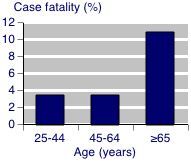
This week’s theme for two minute talks was Adverse Drug Reactions. ADRs are not uncommon and are sometimes fatal. Drug induced agranulocytosis mortality is shown in the figure. Even when an ADR is recognised, its presence may not be flagged up in the final diagnosis and the opportunity to prevent a repeat episode can be lost. When did you last write “Adverse Drug Reaction” in the diagnostic list?

In the talks we heard about:
Non-drug reactions (SS): the importance of asking patients if they are using non-prescribed remedies, the effects of food on drug activity such as pectins/digoxin and broccoli/warfarin.
Prevention (TJ): be aware of interactions with drugs you commonly use and check for interactions when the drug is unusual or has a narrow therapeutic window.
Diagnosis (HG)**: always consider ADR in your differential diagnoses. Be clear about information gathered and consider risk factors.
Warfarin and Antibiotics (RT): always check for interactions and monitor INR daily if interaction is expected. And of course, the second rule of ID, always ask yourself if the antibiotic is really needed.
Penicillins (AM): identify true allergy. Give some thought to the common situation of a patient reporting allergy to an antibiotic but not recalling which one. When you last prescribed an antibiotic did you tell the patient which one it was...or did you say “we’re giving you an antibiotic/a different antibiotic”
Amiodarone (MR): a bit of an aside here...MR, fight your corner, argue for your patient and don’t give in.

**=best talk

I was at a conference recently where one of the speakers had a paroxysm of acronymophilia while talking about ADRs. You will tell from the example that the example was an immunosuppressive agent.

S...Stratify: is the patient at higher risk of an ADR: comorbidities, drugs, age.
A...Assess: Hepatitis status, TB risk, vaccinations up to date?
F...Fend-off: vaccinate, optimise health (stop smoking etc).
E...Evaluate: check what ADRs might be expected, look for them.
T...Treat: nip it in the bud (UTI is easier to treat than septic multi-organ failure).
Y...Yearly: re-evaluate all of the above regularly. The frequency depends on the drug.

I have been contacted by EM from pharmacy, who has asked me to remind everyone about the risk of using ciprofloxacin in patients with epilepsy. And I will take the opportunity to mention the risk of ciprofloxacin in patients with tendonopathy (especially if on steroids). From a more general point of view we discussed the possibility of having a red dot system, similar to that used by radiographers, for the drug kardex. What do you think?

Next week’s two minute talks are on the OMG emergencies. We want to know the practical immediate management of:

Anaphylaxis (HG)
Hyperkalaemia (RT)
Sudden loss of consciousness (MR)
Hypoglycaemia (MR)
Sudden hypotension (TJ)
Sudden hypoxia (DK)

Two minutes please. Keep it concise yet precise and quote your sources. Can we make the handouts a visual aid? We don’t really need the talk written out.

The cardinal paper will be carried over once more...discussion on Tuesday as suggested by HG.

Interesting topics
Mitral regurgitation

ADR Agranulocytosis

Benign intracranial hypertension or alternatively

MJM

Saturday, December 09, 2006

Suspected PE


MP3 File

British Thoracic Society guidelines for the management of suspected acute pulmonary embolism. Thorax 2003;58:470–484

Friday, December 01, 2006

Wardround 1xii6

This week’s two minute talk theme was common investigations. We heard about:

Rheumatoid factor (MJM): present in many inflammatory and infectious illnesses, more useful as a prognostic marker than in diagnosis, and a possible cause of interfernce with immunoassays.
D-dimer (PL) the physician’s bain – thought of as a “rule-out DVT test” by many but actually more of a “profiling the risk of DVT test”, has little practical application in patients who already have high pre-test probability of DVT.

Bilirubin (TJ) measurement may be influenced by food intake.

Glucose (AB): remember that venous and capillary samples give different results by as much as 1 mmol/l. Always get a lab sample at the extremes of results or where hypoglycaemia is suspected in a non-diabetic patient.

Troponin (HG): Excellent talk Dr Gunn: useful prognostic marker in ACIS but must be interpreted with other clinical variables.remember that haemolysed samples will give a spuriously low result. Remember that diseases other than ACIS can cause elevations of troponin and that the timing of the sample with respect to chest pain is important.

CRP (DK): a substance in the serum of patients with acute inflammation that reacted with the C polysaccharide of pneumococcus. Useful to monitor inflammatory activity in view of its short half life. CRP is associated with increased cardiovascular risk. (CRP <1mg/l>3mg/l =high risk).

Urinalysis (SS): have a look at the paper below in interesting topics.


We have deferred the paper for reading until next week. So for next week think about Hope is the thing with feathers. A piece of my mind, Cripe, LD. JAMA 296(15):1815-1816, October 18, 2006. Access it via the elibrary.

For next week’s two minute talks we are addressing adverse drug reactions:
Epidemiology (PA)
Diagnosis (HG)
Important drug interaction I (FY2)
Important drug Interaction II (FY1)
Improving safety (TJ)
Non-drug interactions (SS)

Two minutes only please. Be concise yet precise and quote your sources (not much of that this week). For the Important drug interaction talks choose an important example.

The combined wardround has fallen by the wayside (and been covered with Autumn leaves). It is time to get it going again. The round is difficult when an SHO has to leave at lunchtime so we should begin again (providing GAJ agrees?) on the following Fridays: 15th December, 5th January. Format to be agreed beforehand.

Interesting topics this week:

Sunday, November 26, 2006

Wardround 24xi6

This week's two minutes were themed about 'a patient who changed me/my practice'and with the discussion paper on end of life, turned into quite a discussion. It is useful to reflect on how we change our views as we gain experience and mature and the nature of professional versus societal responsibility.

Next week's two minute tutorials will be based on 'some common tests':
CRP (DK)
Troponin (HG)
D-dimer (PL)
Urinalysis (SS)
Keep it concise and precise.

The paper for reading is A PIECE OF MY MIND, Cripe, Larry D. JAMA 296(15):1815-1816, October 18, 2006. Access it via the elibrary.

Interesting topics
AION
Papilloedema
Drug rashes

MJM

Sunday, November 19, 2006

Wardround 17xi6

A brief blog, sorry.

This week we discussed alternative medicine. I would like to hold on to the concept from the professor of alternative medicine in Exeter: Alternative medicine (as opposed to conventional medicine) is a treatment that has not yet been shown (with scientific rigour) to be effective. By his definition a substantial part of conventional practice is 'alternative'. We should not forget that. I find the NCCAM website http://nccam.nih.gov/ a useful first port of call when a patient asks about a specific complementary treatment.

The read and think for next week will be Measuring quality of life. Is there such a thing as a life not worth living?
Bobbie Farsides,  Robert J Dunlop BMJ 2001;322:1481-1483 ( 16 June ).

I had to leave before the end of the presentations this week so if you already have assignments for next week, do those. If not, let's have two minutes on "an episode which changed me/my practice".

MJM

Sunday, November 05, 2006

Wardround 3xi6

This week's two minute talks were on poisoning. We heard about paracetamol (PL), and the importance of early treatment, early liaison with the transplant unit, and factors which make toxicity more likely. I didn't realise that Gilbert's disease was included in this list. The talk on ethanol and methanol (JW) led us to discuss the early management of unexplained coma (ABCDE-BM). I like the idea of ethanol poisoning being a 'diagnosis of exclusion' but would recommend you have in your mind what you intend to eclude before accepting the diagnosis (true of every diagnosis of exclusion). Tri-cyclics (CC): I agree with Dr Jones that these are the most worrying of the common diagnoses. The watchword should be 'beware'. Be aware of vital signs, ECG (PR, QRS and QT), and acid-base status. Finally we came to carbon monoxide poisoning (AC), and AC raised an interesting point as to possibility of imcreasing oxygen deliverty with CPAP. Prize for the best talk goes to AC.

We had a chance to discuss the Bruno Sachs paper, which had a mixed response. I have to admit that despite trying quite hard I could not bring myself to like it. It did however kick off a discussion about the way we learn what might be called the social aspects of practice.

For next week's talks the theme is making decisions for patients, the legal aspects. Two minutes please on:
Adults with incapacity act (PL)
Emergency detantion orders (CC)
Short term detention orders (SS)
Compulsory treatment orders (AC)
PHA (JW)
Be concise and precise, and quote your sources.

Reading for next week: What's a good doctor and how do you make one? Hurwitz B et al , BMJ 2002;325:667-668

Interesting topics this week:
Tolosa-Hunt syndrome
HOCM

MJM

Sunday, October 29, 2006

Wardround 27x6

This week's theme for the two minute talks was ACIS. This stimulated enough discussion to shunt the discussion paper to next week. Troponin levels in patients on dialysis programs were raised and it has been suggested that their levels may be elevated..Have a look at this article. Hopefully we will be told the average troponins in these patients next week (or post it in the comments). You can also look at this article about changing rates of myocardial infarction. Could I ask you to post the NNts for treatment in the comments section.

The read and think for 3xi6 will be Dr Bruno Sachs addresses an audience of first year medical students: an extract from the writing of Martin Winckler, French doctor and writer
Med. Humanities 2006; 32: 1-3.

Next week's topic is poisoning: I have left my notebook (paper type) at work and can only recall one person's assignment...I can I am sure trust you to own up to which is yours.
Tricyclics
Carbon monoxide
Paracetamol
Ethanol and methanol (JW)

Interesting topics
Systemic rheumatoid vasculitis
A very recent review Systemic rheumatoid vasculitis: A review. Marcia S. Genta et al. Seminars in Arthritis and Rheumatism. October 2006, pages 88-98

MJM

Monday, October 23, 2006

Wardrounds, by Allan Cameron


MP3 File

Wardround 20x6

The Theme for next week's tutorials is ACIS. Could we have two minutes please on the role of each of the following in ACIS:
Investigation ()
Thrombolysis (SS)
Anti-platelet agents (CO)
'Intervention' (CC)
Beta blockers (DK)

I feel that the ratio of mumbling chatter to intellectual discussion is getting out of hand...so the two minutes starts promptly when I say "go". Give out your handouts before the talks start. Keep it precise and concise, don't tell us the obvious. Remember that Dr Thomas wants some NNTs. Don't forget the NNH though.

The read and think for 27x6 will be Dr Bruno Sachs addresses an audience of first year medical students: an extract from the writing of Martin Winckler, French doctor and writer
Med. Humanities 2006; 32: 1-3.

Interesting topics
Myoclonus
What does the pharmacist's symbol "Rx" mean?

MJM

Monday, October 09, 2006

Wardround 6x6

Brief I'm afraid...to blog on holiday is to invite the family's wrath.

Next week's assignments:

Thrombocytopenia DK
Neutropenia SS
Lymphopenia CC
Pancytopenia ?

The reading is Diogenes syndrome

I'll be back after some R&R

MJM

Monday, October 02, 2006

The basic assessment of a patient with suspected muscle disease.


MP3 File

Wardround 29ix6

The theme for our tutorials this week was occupation related diease. I must say that I found this one of the most interestingsubjects we have done. Thank you to Dr Cameron for suggesting the subject. Perhaps everyone could post a one-liner about their particular subject, and advice on a source to read more, in the comments section? The prize this week toAC. I especially like the JAMA. 2006;296:1401-1404. I had rather mixed feelings about the paper. The discussion about the structure of an apology was perhaps useful but I was was a little concerned that an intervention such as this should be presented in such a positive way without the rigour (ie evidence for usefulness) usually attached to medical interventions. A ‘food for thought’; paper without doubt.

Next week we will address some practical problems faced by house officers. So two minutes please, concise and precise, on:

The confused patient (VJ)
Discharge against medical advice (AC)
The violent patient (DK)
‘The obs are fine but he’s just not right doctor’ (SS)

The paper for read and think is Mistakes. Ruth Lesnewski. JAMA. 2006;296:1327-1328.
Get the full text via elibrary

Interesting topics
Neurological problems due to B12 deficiency


MJM

Monday, September 25, 2006

Wardround 23ix6


This week’s theme had been disorders which can mimic anxiety/panic attacks. We heard about phaeochromocytoma in an excellent talk from VJ Thyrotoxicosis, SVT, Hypoxia, prescription drugs and substances of abuse. My prize for the week goes to AC since he specifically compared the rates of symptoms in panic with the same symptoms in SVT. I would like to re-iterate my maxim that panic attacks do not exist in medical in-patients (pre-test probability low). Though the features of a panic attack (as per DSM IV) may well be present you should look hard for an alternative diagnosis. Be especially wary of findings which are not explained by panic alone.

The discussion paper was Does This Patient With Headache Have a Migraine or Need Neuroimaging? Michael E. Detsky et al JAMA. 2006;296:1274-1283. The conclusion of which was "The presence of 4 simple historical features can accurately diagnose migraine. Several individual clinical features were found to be associated with a significant intracranial abnormality, and patients with these features should undergo neuroimaging... The features are summarized by the mnemonic POUNDing (Pulsating, duration of 4-72 hOurs, Unilateral, Nausea, Disabling. If 4 of the 5 criteria are met, the likelihood ratio... for definite or possible migraine is 24."

In next week's two minute tutorials we will address occupational diseases:
Respiratory (VJ)
Neurological (AC)
GI/GU (s)
Musculoskeletal (CC)
Skin (MJM)
(and infections GAJ?)

Two minutes only, keep it concise and precise; quote your sources.

For the 29th I would like you to read and consider Apology in Medical Practice: An Emerging Clinical Skill. Aaron Lazare. JAMA. 2006;296:1401-1404.
Get the full text via library/elibrary.

Interesting topics
Acute sarcoidosis

MJM

Monday, September 18, 2006

Wardround 15ix6

The theme for this week was Venous thromboembolism. We heard from CC about the epidemiology of VTE (extrememly important given the need for pre-test probability assessments prior to lab testing); from VJ regarding investigation (the synthesis of clinical assessment such as Well’s with d-dimer estimation and imaging); and from AC about treatment. The prize this week goes to Dr Joshi for a well presented talk with excellent handout and quoted sources.

The discussion paper raised the importance of precision in diagnosis and communication. Investigations leading to a low probability of DVT are not the same as excluding DVT, even if the treatment decision is to not anticoagulate.

Next week’s theme is disorders which may present as ‘anxiety’:
Phaeochromocytoma (VJ)
Thyrotoxicosis
SVT (AC)
Hypoxia (CC)
Prescription Drugs (MJM)
Substance misuse (GAJ)
(we are not doing PTE since we have so recently done VTE)
wo minutes only, keep it concise and precise; quote your sources.

The paper for discussion on 22nd is Does This Patient With Headache Have a Migraine or Need Neuroimaging? Michael E. Detsky et al JAMA. 2006;296:1274-1283. Get it via the elibrary.

Interesting topics:
Retroperitoneal Fibrosis
The case for chocolate

MJM

Friday, September 08, 2006

Wardround 8ix6

This week’s discussions were disrupted by the ID team. No coincidence, I think, that the rheumatology discussion was subverted to ID. All part of the greater conspiracy? Next they will be claiming that rheumatoid arthritis is an infection.

Perhaps those who did not have opportunity to present will post some brief comments? Dr Joshi’s exposition on the safe use of sulfasalazine was well designed and practical, especially his final paragraph about responding to problems.

We will have to discuss the homeless man on another occasion.

For next week I have chosen neutral ground, neither primarily ID nor Rheumatology: Venous thromboembolism…assignments as below, though you may swap uif you see fit. If your name does not appear you can still do two minutes on an aspect of VTE.

Epidemiology (CC)
Investigation (VJ)
Treatment (AC)
Prognosis

Remember, only two minutes...keep it concise yet precise...quote your sources.

The paper for discussion is from the parliamentary ombudsman and relates to case 200501128
Read and think….have something to say.

Interesting topics this week
Thrombocythaemia
HOCM

MJM

Sunday, September 03, 2006

Wardround 1ix6

The week's two minute talks were themed about antiviral treatment. Would each of you click the comment section and put in one sentence from your reading of the subject?

Next week we will hear about the safer use of DMARDs. The BSR last week published its guidelines for these drugs. You can get the local guidelines from my secretary. I had hoped to give a link to the BSR guideline but it has been taken off the website. I'll put in a link if it comes back. So we will hear about:
Methotrexate (CC)
Sulfasalazine (VJ)
Leflunomide (DL)
Etanercept (BW)

Next week's reading will be The homeless man on morning rounds. Jerome Lowenstein. I will leave a copy on the ward.

Interesting topics:
Homocysteine
Biventricular pacing

MJM

Sunday, August 27, 2006

Takayasu's arteritis


MP3 File

Wardround 25viii6

This week’s two minute talks were themed around hospital acquired infection:
HA UTI (DL) and HA Pneumonia (BW), both were well researched and almost to time. Could I ask that next week you begin to list your sources so that others can follow up on reading.

For next week the theme will be anti-viral treatments, with assignments as follows:
Hepatitis C (BW)
Hepatitis B (?GAJ)
Herpes viruses (MJM)
Influenza (CC)
SARS (LD)
Keep to time, be concise but precise, and quote your sources.

The paper for discussion had been: Changing the Paradigm for HIV Testing — The End of Exceptionalism. Ronald Bayer, Amy L. Fairchild. NEJM August 17 2006, Volume 355:647-649. Apologies to everyone for my rather abrupt and dogmatic devil’s advocacy. The paper, though ostensibly about a specific ethical issue, does offer food for thought about informed consent in general. A study has been done in D&G surveying patient's views about consent in lab testing, so perhaps we can bring that along for discussion sometime?

For next week’s reading I thought we might have something clinical rather than ethical. So let’s give some thought to syncope. Read Current evaluation and management of syncope. Kapoor WN. Circulation, Sept 24, 2002;106 (13):1606-1609.

Interesting topics this week
Periodic fever

Herpes Encephalitis

Tilt testing
uptodate also has a good introductory article on the subject.

MJM

Friday, August 18, 2006

Wardround 18viii6


The reading for this week and the two minute talks were themed around the Plague of Athens. All well thought out with logical approaches to diagnosis. The internet is full of sites discussing the possible diagnoses, but you might find this article useful:

The cause of the plague of Athens: plague, typhoid, typhus, smallpox, or measles? Burke A. Cunha, Infect Dis Clin N Am 18 (2004) 29–43.

Now I know DL had difficulty getting these out of the eLibrary but I have tried again today and could access the PDFs without difficulty (except having to enter my athens password twice). Go on take the challenge…access this journal on-line. I have left a copy on the ward if you are unsuccessful. This copy of Infect Dis Clin N Am has a historical theme and the other articles are worth a look. I particularly liked:

Osler on typhoid fever: differentiating typhoid from typhus and malaria. Cunha BA. Dis Clin North Am. 2004 Mar;18(1):111-25.

Next week’s two minute tutorials are on hospital acquired infection:
Dr Mohan will be leaving us but those left behind can fight on. Hosp. acquired UTI (Dr Lindsay), Hospital Acquired pneumonia (Dr Williams). Two minutes please keep it concise and precise.

The reading for next week is for once quite up to date. Changing the Paradigm for HIV Testing — The End of Exceptionalism. Ronald Bayer, Amy L. Fairchild. NEJM August 17 2006, Volume 355:647-649. Read and think


Interesting topics this week

Arteritis
Hypokalaemia
Ankylosing spondylitis
Typical/Atypical chest pain

MJM

Friday, August 11, 2006

Wardround 11viii6


The two minute tutorials this week were about diabetic retinopathy with Clinical features by NM and Management by VJ. Both were well prepared talks for such a broad subject. Dr Mohan gets this week’s prize (quoted his sources which included this which is worth a look. He has also posted more information at http://kmneo.blogspot.com/

This week’s reading was "Stepford doctors": an allegory. GM Sayers. Medical Humanities 2006;32:57-58. It seems more an analogy than allegory, and I am not sure that I agree completely with the article. Presumably it has been written to stimulate thought (and discussion) regarding the part doctors play in health care. It ends with this paragraph: This allegory cannot be concluded because it is ongoing. Some doctors refused to "reform" and transform into "Stepford doctors". They believed that their allegiance lay with their patients and not the masters. Those who did not leave the profession (as many did) remain part of the lineage from which they stemmed. They continue to defend the freedom to practise the sort of medicine their patients want. Only time will tell whether these doctors become extinct or manage to inspire their followers to reclaim their vocation. What do you think?

Next week’s reading is The plague of Athens. The link for reading is in last week’s post (see below). You must decide on a diagnosis and will have two minutes to make your case on the 18th August.

Interesting topics this week
Hyperkalaemia (beware Lo-salt preparations)
Septic shock
Atrial fibrillation
Toxic confusional states
Cannabis lung


MJM

Sunday, August 06, 2006

Wardround 4viii6

This week’s two minute tutorials were about electrolytes:
Sodium Dr Mohan (excellent handout)
Creatinine Dr Joshi
Glucose
Calcium Dr Sykes
Magnesium MJM
This week’s prize goes to Dr Sykes. Would each of you post a sentence in the comments section about your subject please.

Next week's assignments are:
Clinical features of diabetic retinopathy (Dr Mohan)
Management of retinopathy (Dr Joshi)
Non-retinopathic eye disease in diabetes (up for grabs)
Two minutes please, keep it concise and precise and quote your sources.

The reading for this week was: Reassurance and the Warning on the Label. Jerome Lowenstein, from The Midnight Meal and other essays about Doctors, Patients, and Medicine (1997). In the essay Dr Lowenstein highlights the difference between advice and reassurance. We often attach warnings to advice given to patients along the lines of ..."we cannot predict whether it will work" or "we do not know what the effects will be". But reassurance must be free of such caveats since it is undermined by such additions. Do you agree?

The reading for Friday 11th will be "Stepford doctors": an allegory. GM Sayers. Medical Humanities 2006;32:57-58. Read and think.

The reading for Friday 18th is a description of the plague of Athens, written in 431BC by Thucydides in The History of the Peloponnesian War. If you click on the link it will take you to a copy of the piece. The web page begins with chapter VI, but you can skip down to chapter VII (unless you would like to read about the war). If you cannot find the right section, press ctrl-F and type in plague. The challenge is to make a diagnosis. You will have two minutes to make your case for the diagnosis of your choice. This will be in place of the usual two minute tutorials that week.

Interesting topics this week:
Hyponatraemia

MJM

magnesium

Magnesium


MP3 File

Tuesday, August 01, 2006

Wardround 1viii6


A warm welcome to the new clutch. I am afraid that this weblog will be the source of much work for you. Check it each week to confirm your assignments for the two minute tutorials and the paper for ‘reading and thinking’.

Since you will be finding your feet for the first few days, there will be only very simple two minute tutorials, but I will allocate them personally.

The reading for this week is: Reassurance and the Warning on the Label. Jerome Lowenstein, from The Midnight Meal and other essays about Doctors, Patients, and Medicine (1997). Read it, think about it, and we can discuss it over coffee on Friday.

Interesting cases this week:

Sick sinus syndrome.
Obstructive uropathy.

MJM

Saturday, July 08, 2006

Wardround 7vii6

A very brief blog this time I'm afraid...must dash to holidays. I have forgotten to bring my notebook (paper not CPU) home, so I will not give comments about this week's talks other than to say that Hannah Gunn's mock GP letter, to illustrate which information we need to pass to GPs, was a stroke of genius. We must make such things a regular feature.

Next week's tutorials are themed about parasites...you know your assignments.

The reading for next week is to be found here and continues the theme of sharing medical information.

There will be a break in the blog for two weeks. MJM

Sunday, July 02, 2006

Wardround 1vii6

It seems a while since the last wardround blog. But it all starts again. This weeks tutorials were about anaemia: Microcytic (EB), Macrocytic (VA), Normocytic (MC), Haemolytic (HG), Investigation (RS), Marrow failure (GT). I find that I gave equal marks to all so the winner of best talk will have to be based on gestalt. Prize therefore to Dr Chee for clarity and making it concise.

Next week's theme is Polymyalgia Rheumatica: assignments as listed below. Keep to two minutes and don't put in too much. I am going to add another limit...no more than 50 words on your handout.

Polymyalgia Rheumatica (and GCA if you like):
What the patient needs to know (house officer)
What the GP needs to know (HG)
Diagnosis (EB)
Treatment (RS)
Clinical Epidemiology (MC)
Prognosis (GT)

Next week's paper for discussion: Doctors’ use of euphemisms and their impact on patients’ beliefs about health: an experimental study of heart failure. Taylor M, Ogden J. Patient Education and Counseling. Volume 57, Issue 3 , June 2005, Pages 321-326. http://dx.doi.org/10.1016/j.pec.2004.09.001

MJM

Friday, June 23, 2006

EULAR 2006


EULAR 2006 Odds and ends (posters):

ESPOIR cohort: predicting the evolution of undifferentiated Inflammatory arthritis into RA. Multiple regression analysis gave the following odds ratios: Symmetrical onset 2.5; morning stiffness >60 minutes 1.7; synovitis >6 4.1; RF+ 2.2; anti-CCP+ 5.6. (Abstract THU0103). This does highlight the importance of anti-CCP. I hope we can get it soon.

Use of MTX (10-20mg/week) in Chronic pyrophosphate arthropathy. Tiny uncontrolled study of five patients but all reported as significantly improved. (THU0468)

Use of questionnaires to ask about recent medical and demographic events to improve efficiency in clinics (by T Pincus THU0130). I wonder if we should add something like this to our own clinic questionnaires?

Anti-CCP antibodies may predict which patients with palindromic rheumatism will evolve into RA (FRI0044). But what good that will do remains to be seen.

Patients on adalimumab seem to respond normally to immunisation against pneumococci and influenza (FRI0064). Which is I suppose useful.

Etanercept reported as effective in refractory PMR (series of 3, uncontrolled study) FRI0267. Significant changes in pain scores and HAQ of the order of 50%, but it only seemed to achieve a reduction in prednisolone of 5-7.5mg.

Two case reports of successful treatment of chronic tophaceous gout with infliximab. (FRI0491, FRI0496). Hmmm?

A Dutch study showed acute gout was more common in the Spring (FRI0495). I will mull over how that will change my practice.

A survey of UK rheumatologists (which included me!) showed that the BNF colchicine regime was used by only a minority. More than half used colchicine bd or tds.(FRI0498)

I have put the abstract numbers in, since you can get the abstracts online from the eular website http://www.eular.org

So what questions are raised by this meeting?


1. Can we be any better at predicting which patients with undifferentiated inflammatory arthritis will develop damaging arthritis?

Possibly, we know that anti-CCP positive patients with UIA are more likely to develop RA: 21% of UIA are CCP+, of those 93% develop RA, but 25% of CCP- also develop RA. In one talk this meeting it was suggested that a clinical prediction rule using 9 variables (including CCP) was able to assign patients such that only 6% of those predicted not to develop RA actually did go on to RA. This needs to be tested prospectively but if it does hold true, we need to consider if delaying treatment in this 6% with RA is acceptable. Clearly some members of the audience did not think it was. I will continue to treat all UIA/PISA with DMARDs for the time being.

I do wonder though if it might be feasible to use anti-CCP status to inform decisions about withdrawing DMARDs in that group which enters remission. They have either really gone into remission or are held in remission by treatment. It would seem reasonable to give greater consideration to stopping DMARDs in the CCP negative cases...but I do not think there is evidence to support this.

2. Which DMARD to use in early inflammatory arthritis?
The easy answer is...one that works. But which to try first? If monotherapy is used it looks as if it should be with more intensive follow-up and tight control of synovitis (IM/IA steroids?). I tend to use MTX but the TICORA study did well with SASP as the initial drug.

MJM

Thursday, June 22, 2006

EULAR 2006

Today has been a busy day at the conference, and my internet time is running out...so this will have to be quick, key points only.

The question was raised again as to whether Anti-CCP positive/negative Rheumatoid disease is different. One postulation is that proteins become citrillunated (by smoking for example) and subjects with the shared epitope variants of DR4 then develop anti-CCP antibodies. The Prompt study from yesterday showed that MTX had no impact on the evolution of anti-CCP negative undifferentiated arthritis to RA, but in anti-ccp positive UA MTX significantly reduced the evolution to RA. Treatment with anti-BLys antibodies was also less effective in CCP negative RA.

Much talk about the best use of DMARDs...use early in adequate doses (dare I say aggressive doses?), monitor frequently and adjust to control disease (as in the TICORA study). Consider checking anti-CCP status in RF negative inflammatory arthrtis.

Treatment of refractory RA (ie failed MTX and one anti-TNF)
Optimise DMARD: dose to 25mg/week, change PO to SubCut, use a split dose (more on that later)
Optimise Anti-TNF: dose, frequency
Switch TNF: more useful for secondary failures (ie worked initially) than primary failures
Use another biologic: Abatacept, Rituximab.

Just a short note for now since my internet connection is about to run out of money.


PS split dose MTX: taking some in the evening and some next morning may improve bioavailability of higher doses (above 15mg) but the evidence is limited. Worth a try if all else fails though.

MJM

Sunday, June 04, 2006

History of Thiamine

Why Vitamin B is so named.


MP3 File

The structure of Thiamine


Bondol. A small bird which contributed to a Nobel prize.


Further reading on beriberi.

Wardround 2vi6

This week’s two minute tutorials were themed around diabetes:

Diagnosis and investigation (JCM)
Presentations (CC)
Complications (EB)
Oral hypoglycaemics (JA)
Diet (RS)
Insulin ℞ (VA)


Well researched talks overall, and several well timed to the two minutes. I was surprised by the fact that by 55 years of age 35% of patients with T1DM would have died from MI. Nice touch by VA to have used the diabetes specialist nurses as a source. If you want to read a quick (<15 minutes ) review of DM try these documents:

http://www.emedicine.com/emerg/topic133.htm
http://www.emedicine.com/emerg/topic134.htm

For next week the topic is renal:

Assessment of renal function (JCM)
Causes of acute renal failure (VA)
Management of ARF other than dialysis (EB)
Dialysis in ARF (CC)
Complications of CRF (PS)

Remember, two minutes only, so keep it concise and precise. Quote your sources.

The reading last week was A Mysterious Death. Oldach DW et al. NEJM 1998; 338(24):1763-1769. This is a case discussion of the death of Alexander the Great. The systematic approach to differential diagnosis is instructive, and the paper should act as a trigger to revise the features of those diseases mentioned. Perhaps if we do this paper again it would be useful to combine it with the two minute talks to revise the features of the major diagnoses discussed? Comments please?

For next time the reading is: Spellbinding and spellbreaking in convalescence. George Day. Lancet 1961; 279 (7222):211-213. Log on to the NHS Scotland elibrary with your Athens password and choose the Lancet. You will be offered several sources, choose the Sciencedirect Lancet site. If you have trouble (you shouldn’t) come and find me...I have a hard copy.

MJM

Monday, May 22, 2006

Wardround 19v6

A thing of beauty is a joy forever. Even my nemesis pictured here.

This week's two minute tutorials were a challenge; such broad subjects, inflammatory bowel disorders, so little time. Very interesting though. If you email your talks to me I will incorporate them in the blog.

The week's Reading had been The Iowa Car Crop by S E Landsberg. I had asked you why you thought I had chosen it and how it might be relevent to medicine. HmmmH.... I admit to being seduced by the first three lines: "A thing of beauty is a joy forever and there is nothing more beautiful than a succinct and flawless argument." The paper was chosen because any critical criteria I may use for choosing our reading were corrupted by the paper's rhetoric (or more correctly the author's rhetoric). The opening lines appealed to me and so the paper was chosen. The relevance to medicine is two fold. Firstly beware accepting or rejecting papers because of rhetoric rather than substance. the second part relates to the ships that disappear over the horizon and return later loaded with Toyotas. The author suggests that for an economist to analyse this phenomenon it is not necessary to understand the nature of Japan...it is adequate to imagine it a amagic box which convertts wheat into Toyotas. Diagnoses are similar. It is not always necessary to know everything about a patient's disease (indeed we never know everything) in order to produce a workable management plan. It is only important to know those things which are necessary to produce the plan. I do not know the cause of polymyalgia rheumatica, but I do know the prognosis, complications, treatment and differential diagnosis.

Next week's two minute tutorials are related to Hypertension:
Ace inhibitors (TS)
Beta-blockers (EB)
Calcium channel blockers (AJ)
Diuretics (CC)
Non-drug treatment (JCM)
Investigation of HT (MC)
Keep up the excellent standard. Quote your sources, keep it concise and precise.

The reading for the week is A mysterious death. David W Oldach, Robert E Richard, Eugene N Borza, R Michael Benitez. The New England Journal of Medicine. Jun 11, 1998.Vol.338, Iss. 24; pg. 1764, 6 pgs

I am away this week, see you next week. MJM

Sunday, May 14, 2006

Saturday, May 13, 2006

Wardround 12v6

This week’s theme was Spirochaetal diseases, Syphilis, Yaws, Pinta, Leptospirosis and Lyme disease. I think this was quite a challenge, but the talks were excellent and a good stimulus for further reading on my part. I will try to get the fact sheets you made scanned and made available, but if you could email the files to me it would be easier.

Next week’s theme is inflammatory bowel diseases: UC, Crohn’s, Coeliac, C.difficile. You have your assignments. Two minute talks please, concise and precise.

This week’s reading was Clinical craft: a lesson from Liverpool. D M Gore Journal of Medical Ethics 27:74-75 (2001). "Surely now is a good time to revisit the concept of clinical craft. ... we also need a certain amount of pride to keep up our morale. By celebrating our craft we can identify with skilled workers anywhere." Pride in a job well done is a precious crop, full of nourisment for the spirit and vitamins for the soul. It is all too easy to tend the plant but allow the fruit to wither on the branch or fall to rot on the ground. My advice: Take some time each week to reflect on what you have achieved as an individual or as part of a team.

For next week I have chosen a different subject: The Iowa Car Crop, S E Landsburg, from The Armchair Economist (1995). I have left a copy on the ward. I would like you to read this and ponder two things: why I have chosen it and what relevance it has for medicine.

Interesting topics this week
SIRS (Systemic inflammatory response syndrome) with hypoxia, eosinophilia, myalgia and anti-MPO antibodies.
CSS
SIRS
Eosinophilia myalgia syndrome (as a fascinoma)

Ultrasound for pleural effusions

Staph. septicaemia. How to confirm SBE; do you know the Duke criteria? And if you do....Are they useful in clinical practice?

MJM

Sunday, May 07, 2006

Wardround 5v6

The two minute tutorials this week were themed around common drugs: Furosemide, Coamoxiclav, Metformin, Citalopram, Omeprazole. It is always useful to focus on those things that would otherwise be part of the background. It was clear that there were important actions one can take when assessing a patient taking one of these agents.

Has it been effective? Is it still needed? Can it be withdrawn? should that be rapid or slow? Are there warnings for the patient? do those warnings change the patient's views about using the treatment.

What sticks in my mind? Do not stop citalopram abruptly, warn patients on PPIs about infection risks (and how to reduce them), warn patients to stop metformin if they become breathless or are vomiting, beware clavulanic acid (coamoxiclav) with liver disease.

The reading this week was Bandolier: What patients think. A comment on the Original paper: PN Trewby et al. Are preventative drugs preventive enough? A study of patients' expectation of benefits from preventive drugs. Clinical Medicine 2002 2: 527-533. There seems to be a gap between the risk/benefit thresholds exhibited by doctors and patients, at least in so far as this study shows.

The Bandolier comment includes "This is an interesting and imaginative paper that tells us what patients think. Half were happy to take a preventive drug if the hypothetical five year absolute risk reduction was 20%, or an NNT of 5. ..... There is a clear discrepancy. Few preventive medicines for preventing heart attacks would seem to meet patient expectation.... the power of the doctor to advise. If their doctor recommended it, more than twice as many subjects would take the medicine. This, though, imposes a significant burden on doctors properly to inform their patients. Much less attention has been paid to how patients think about their own versus population benefit, and especially how the information is presented. "

Interesting topics this week:

Trigeminal neuralgia and Lyme disease

Next week's two minute talks are themed around spirochaetes (I hope Dr Jones has handed out the assignments).

The reading for next week is: Clinical craft: a lesson from Liverpool. D M Gore Journal of Medical Ethics 27:74-75 (2001)

MJM

Tuesday, May 02, 2006

Connective Tissue Disorders


MP3 File

A brief introduction to diagnosis of CTDs

Common drugs

This week’s paper for discussion is not a real paper, but a comment. I did promise a brief paper for this week. You can of course read the original if it suits you to so do. The reading is from Bandolier: What patients think.

Original paper: PN Trewby et al. Are preventative drugs preventive enough? A study of patients' expectation of benefits from preventive drugs. Clinical Medicine 2002 2: 527-533.

The two minute tutorials are themed about common drugs: Furosemide, Metformin, Citalopram, Omeprazole, Coamoxiclav. Remember, two minutes only. Be concise and precise, quote sources and a handout please.

MJM